
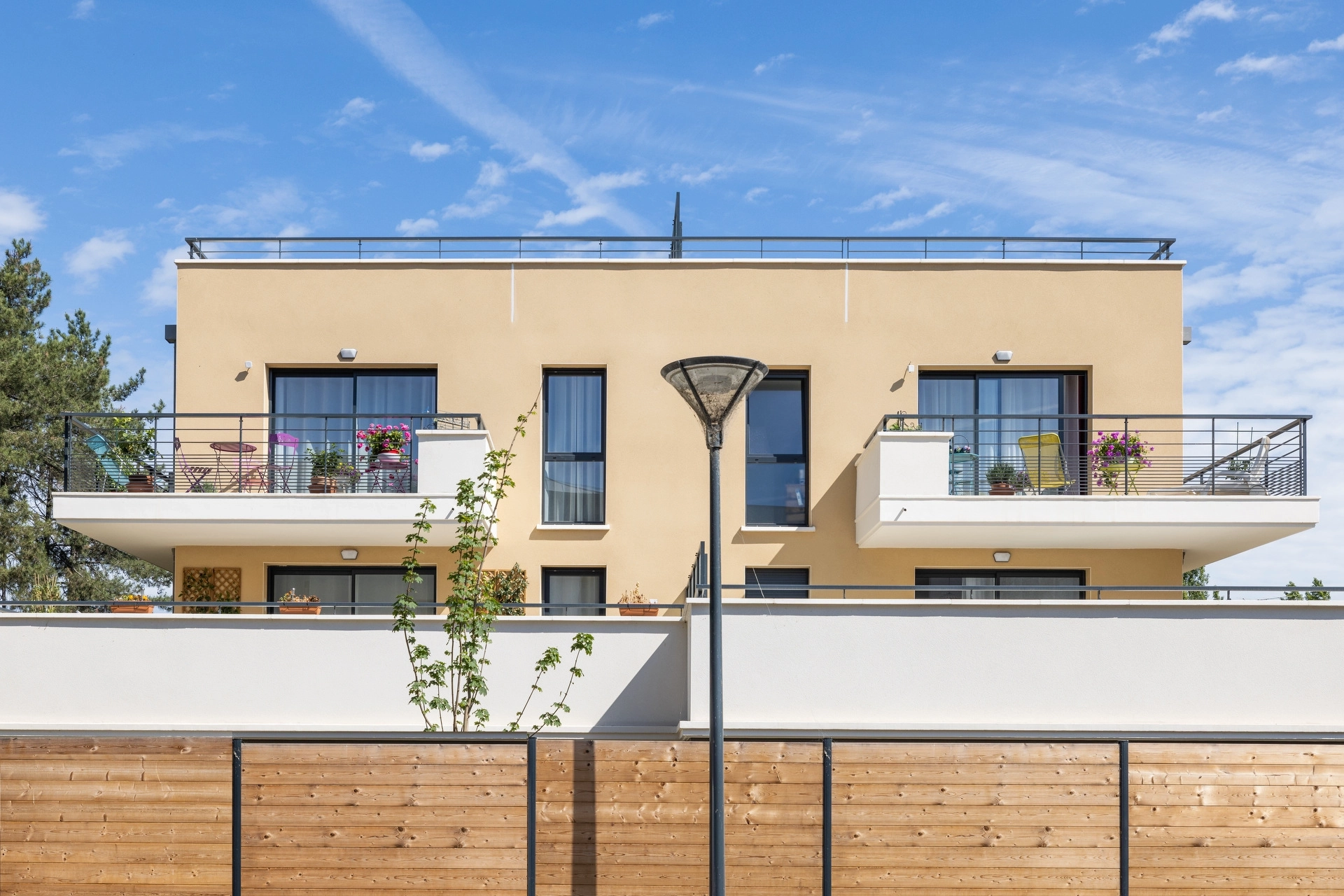
Optical distortions are among the most common and demanding challenges in architecture photography. They can alter the perception of a building, twist lines, and weaken the architectural intent. To guarantee a faithful representation, I anticipate these phenomena right from the preparation stage of the shoot, and then apply a rigorous method combining controlled capture and precise retouching.
This high standard echoes my work on new real estate and residential developments, as detailed in my article on why real estate developers need consistent images for an entire development.
Where Do Optical Distortions Come From?
Several factors can cause these distortions:
- Optical distortions of wide-angle lenses: In architecture, tight spaces or large facades often require the use of wide lenses. These lenses naturally produce a curvature of lines, known as barrel or pincushion distortion.
- Diverging perspectives: This occurs when the camera is not perfectly parallel to the building. By tilting the camera slightly upwards, the vertical lines converge: this is the “falling lines” effect.
- Lack of distance: Both indoors and outdoors, site constraints (narrow sidewalks, furniture, physical boundaries) sometimes reduce maneuverability and accentuate distortions.
Anticipation Before the Shoot
Before setting up my gear, I precisely analyze the location.
Scouting and Structural Axes
I start by identifying the essential lines: verticals, horizontals, symmetries, and circulation axes. This approach aligns with the one I use in my architecture reportages, where every line influences how the location is read.
Focal Length Choice
As soon as I have enough distance, I favor a longer focal length over a wide-angle lens to significantly reduce perspective distortion.
Tripod, Bubble Level, and a Perfectly Vertical Sensor
This trio guarantees a solid foundation, with verticals completely controlled right from the capture.
On-Site Techniques to Minimize Distortions
Using a Tilt-Shift Lens
This is the ultimate must-have tool for architecture. Thanks to its shift movements, I mechanically correct perspectives without tilting the camera body. I can photograph a tall facade while perfectly preserving the straightness of the verticals.
Rigorous Alignment
I continuously verify that the camera sensor remains parallel to the main surfaces, even in highly complex environments.
Height and Distance Adjustments
Stepping back by just a meter or slightly raising the camera height is sometimes enough to straighten the perception of the lines.
Tips for Narrow Interiors
In new housing or premium spaces, I compose with the volumes and furniture. This consistency work is a direct continuation of what I explain in my article on photographing the common areas of a residence.
Post-Production Corrections
- Lightroom (global corrections): I begin by applying the appropriate optical lens profiles. Then, I refine the verticals and horizontals using the transform tools.
- Photoshop (complex corrections): When the building presents a specific geometry (asymmetrical facade, slope, urban elements), I use Photoshop for a finer, localized correction.
I make sure to maintain consistent verticals and a natural rendering throughout the entire reportage. This precision is essential, particularly for premium projects or reportages dedicated to commercial spaces, like those showcased in my Retail & Commercial real estate portfolio.
A Few Concrete Examples from My Missions
- When tilt-shift becomes indispensable: Tall facades, tight perspectives, narrow streets… In these setups, it is absolutely essential to guarantee a faithful result.
- When slight distortion becomes an aesthetic choice: On certain contemporary projects, deliberate tension in the lines can actually reinforce the image’s dynamic energy.
- Going from falling lines to perfectly straight verticals: This straightening process completely transforms how the building is read. This type of correction plays a decisive role in architectural portfolios and marketing materials.
Conclusion
Mastering optical distortions is not just a retouching step. It is a comprehensive process that begins with understanding the location, continues with precise shooting, and finalizes with meticulous post-production work. This approach allows me to offer real estate professionals, architects, and decorators natural, reliable images perfectly aligned with the architectural intent.