
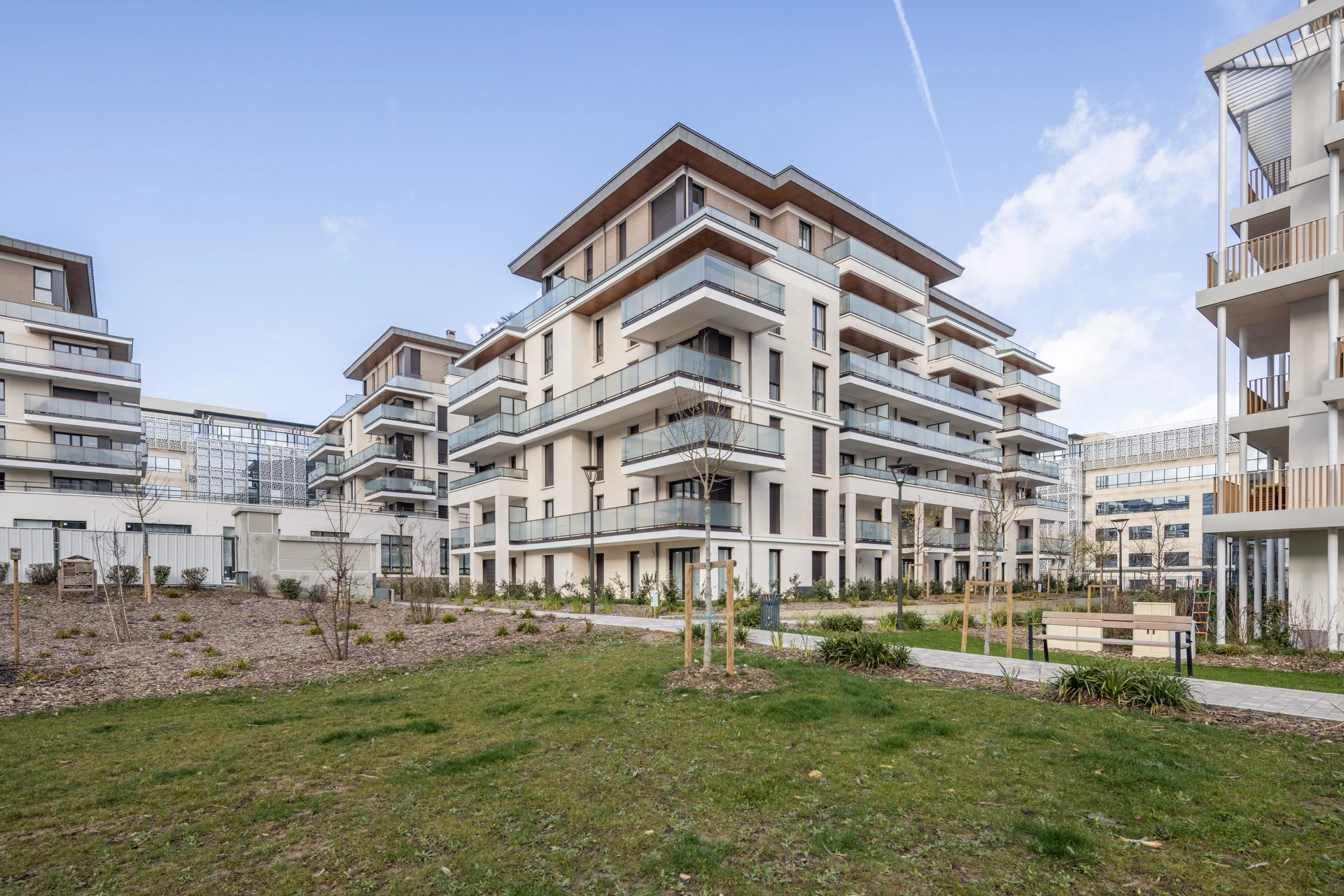
Marketing a real estate development no longer relies solely on floor plans and 3D renderings. Today, the actual image of the delivered building becomes a decisive lever to reassure, seduce, and trigger the purchasing decision.
Hiring an architecture photographer for real estate developers in France is therefore not just an aesthetic choice. It is a strategic tool serving sales and the group’s brand image.
The Image as a Decision Accelerator
A buyer rarely hesitates over the exact surface area of a living room down to the last few inches. However, they are extremely sensitive to:
- Brightness.
- The perception of volumes.
- The quality of the common areas.
- The integration of the building into its surroundings.
Professional photographs transform a real estate development into a concrete visual experience. In my architecture photography reportages, I seek to translate the project’s intention, the consistency of the lines, and the relationship with the urban or landscape context. This approach goes beyond mere documentation: it creates projection.
Enhancing a Development at the Key Moment: Delivery
The moment of delivery is strategic. The building is clean, the materials are intact, the volumes are readable, the spaces are still uncluttered. It is precisely at this stage that I intervene most often.
An end-of-construction reportage allows you to:
- Feed sales materials.
- Update the developer’s website.
- Reinforce the credibility of future programs.
- Enrich call-for-tender files.
I explain the importance of this step in my article dedicated to the end-of-construction reportage.
Image Consistency Across All Developments
Developers often run several operations in parallel, sometimes in different regions. Working with a mobile architecture photographer in France allows you to:
- Unify the visual signature.
- Harmonize the framing.
- Ensure colorimetric continuity.
- Maintain a constant level of standards.
This consistency strengthens the group’s identity and facilitates brand recognition. To understand why this homogeneity is essential, I detail this point in my article on the visual consistency of real estate developments.
Highlighting Common Areas: A Major Selling Point
Entrance halls, stairs, landings, shared gardens, parking lots, bike rooms… These spaces play a decisive role in the qualitative perception of a residence.
Precise photographic treatment allows you to:
- Highlight materials.
- Master vertical lines.
- Reveal natural light.
- Avoid excessive distortion.
On my page dedicated to residential real estate, I detail how I work with volumes and light to reinforce the perception of standing.
Accelerating Sales Through Versatile Images
A well-constructed architectural reportage can be adapted for:
- The developer’s website.
- Social media.
- Commercial brochures.
- Advertising campaigns.
- Press releases.
The higher the quality of the images, the more versatile they become. A rigorously photographed development can be used to sell the final units, illustrate future operations, respond to calls for tenders, and feed corporate materials. It is a lasting investment, not just a one-off expense.
The Importance of Realism: Avoiding Over-Correction
In new real estate, the temptation is great to embellish excessively. However, excessive retouching can harm the project’s credibility.
I favor precise but natural post-production, in order to faithfully restore:
- Colors.
- Textures.
- Proportions.
- Lighting atmospheres.
I develop this approach in my article on the importance of mastered post-production in architecture photography.
A Strategic Asset for National Developers
For groups operating in multiple regions, hiring an architecture photographer for real estate developers in France offers several advantages: a single point of contact, a constant method, a global strategic vision, and national intervention capacity. This mobility makes it possible to centralize image production and avoid qualitative disparities between different operations.
The Environment: A Key Value Factor
A real estate development is not limited to its buildings. It fits into a neighborhood, a street, a landscape, and an urban dynamic. My approach consists of integrating this context into the visual narrative to enhance the project’s attractiveness. This dimension is essential to reassure buyers about their future living environment.
Conclusion: Investing in Images to Sell Faster
In a competitive market, visual quality makes the difference. Hiring an architecture photographer for real estate developers in France makes it possible to reinforce a program’s credibility, accelerate decision-making, enhance the group’s image, and optimize sales materials.
The image is not a detail. It is a strategic lever. Contact me directly to discuss your next development.