
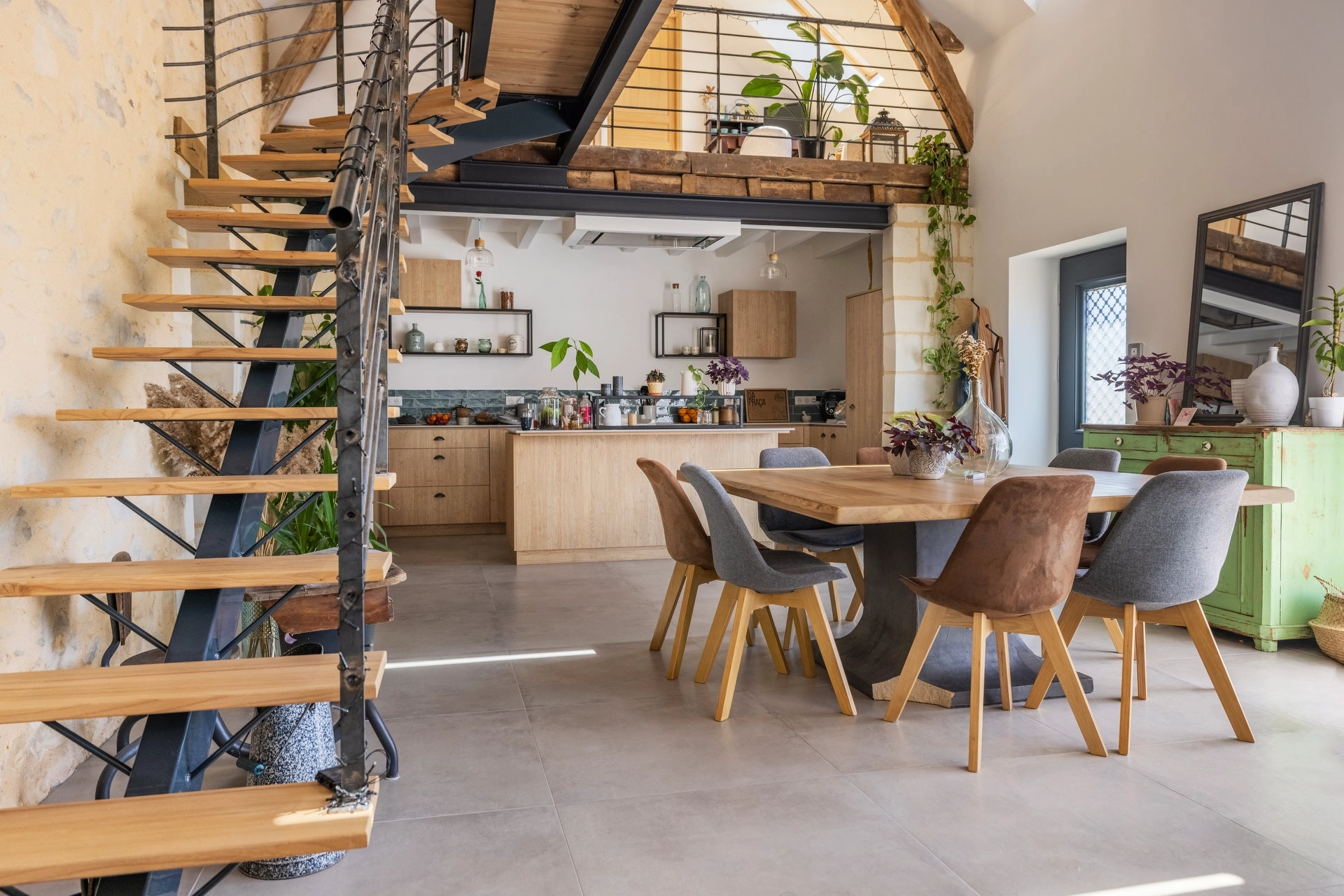
In architecture photography, every project is unique. The building, its use, its environment, the light, the technical constraints, or even the communication goals impose a tailor-made approach. Seeking to apply a standardized method amounts to flattening the images, losing the singularity of the place, and ultimately weakening the architectural message.
Unlike certain industrial practices in real estate photography, architecture photography demands a sharp reading of the project and constant adaptation.
Every Building Tells a Different Story
A commercial office building, a contemporary home, a luxury hotel, or a real estate development are not photographed in the same way. Architecture carries an intention: volumes, materials, rhythms, usages.
This is precisely what I try to translate into my images, as I explain in my article on building a cohesive series in architectural photography. A successful series relies on a global understanding of the project, not on a sequence of isolated and repetitive photos.
Light Demands Constant Adaptation
Light is never identical from one project to another. The building’s orientation, an open or urban environment, the season, the weather: every parameter radically modifies the photographic approach.
Standardizing a shoot means ignoring these essential variations. It also means taking the risk of producing flat or artificial images. I address this issue in detail in Why a building’s orientation radically changes the photographic approach, where I explain how I adapt my schedule, my framing, and my exposure to each situation.
Context is an Integral Part of Architecture
A building never exists alone. Its immediate environment—the neighborhood, landscape, urban fabric—strongly influences its perception.
In some cases, the context must be fully integrated into the image; in others, it must be subtly suggested. This reflection ties into my approach developed in Photographing architecture in dense urban environments, where constraints become levers for composition rather than limitations.
Technical Constraints Prevent Any Universal Recipe
Optical distortions, vertical line management, reflections, backlighting, restricted spaces: each project poses specific challenges.
This is why I can never apply a “default” editing process or framing. In How I anticipate and correct optical distortions in architecture, I explain why these adjustments must be thought out during the shoot and adapted to each architecture.
Standardization Harms the Credibility of Projects
Overly similar images from one project to another give the impression that the buildings look alike. For an architect, a developer, or a brand, this is a major risk.
Standardized photography weakens the reading of the project, just as excessive post-production can harm trust. This point is developed in The Invisible Serving the Real: why post-production is the essence of architecture photography, where I defend a discreet retouching process, serving the real.
Conclusion
Architecture photography cannot be industrialized without losing its meaning. Each project deserves a specific approach, conceived according to its identity, its constraints, and its goals.
It is this adaptability that makes it possible to produce credible, readable, and sustainable images, serving the architecture rather than an imposed style.