
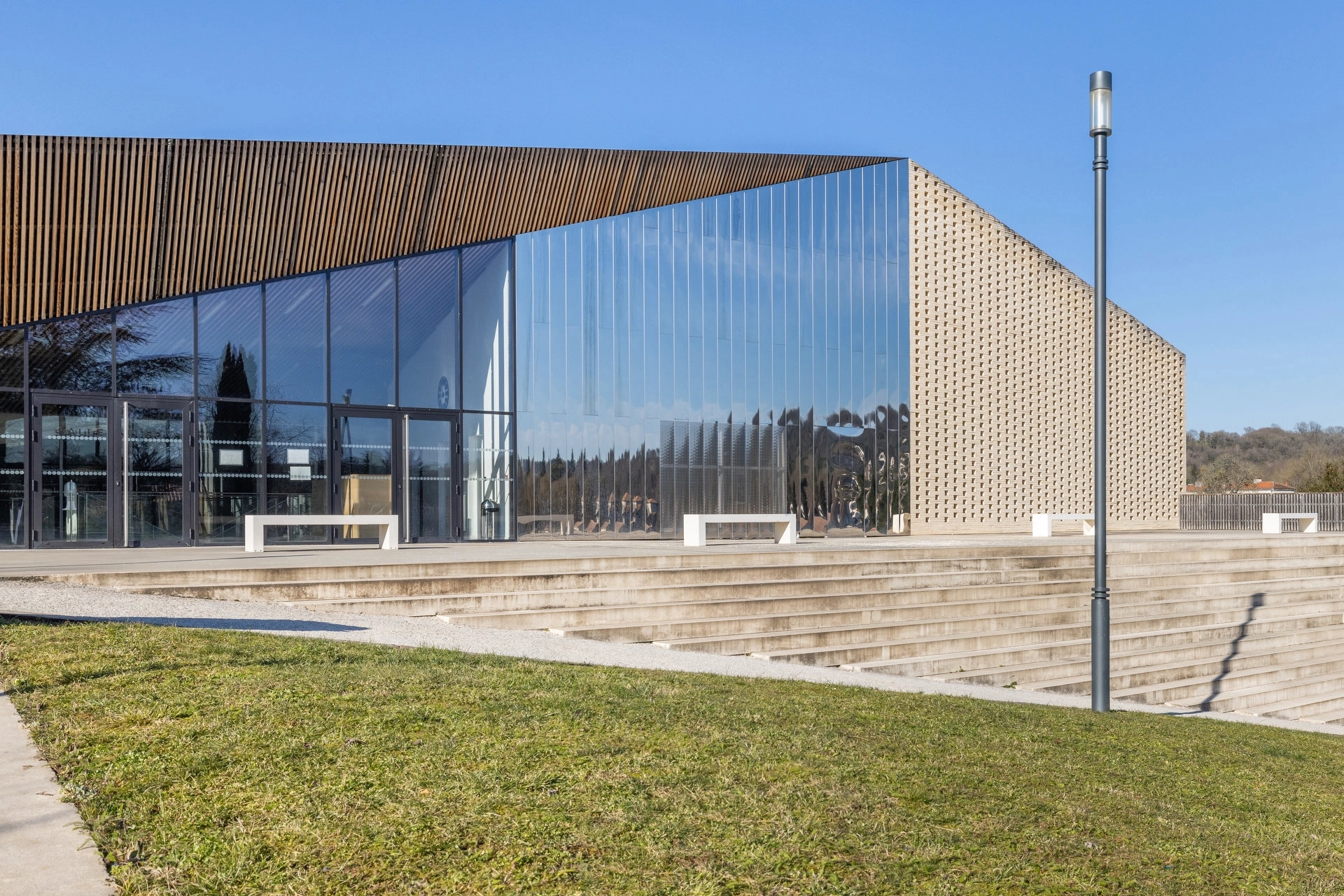
In architecture photography, a successful image is not about showing everything. On the contrary, it relies on a precise selection: what I choose to reveal, but also what I decide to exclude from the frame. This ability to prioritize visual information is essential to produce images that are readable, credible, and consistent with the architectural intent of the project.
Photographing a building is not about exhaustively documenting a place. It is about constructing a viewpoint.
Showing the Essential: Architectural Intent First and Foremost
Every architectural project is based on a clear intention: a play of volumes, a relationship with light, a specific materiality, or a dialogue with its environment. My role is to identify this intention right from the scouting phase, as I detail in my article on the importance of scouting before an architecture or real estate shoot.
Rather than multiplying viewpoints, I favor images that:
- Clarify the reading of volumes.
- Reinforce the logic of circulation flows.
- Enhance materials and their finishes.
- Respect the balance between architecture and natural light.
This approach aligns with my method of building a cohesive series in architectural photography, where each image has a specific function in the overall visual narrative.
What Photography Must Deliberately Hide
Conversely, not everything is meant to be shown. Certain elements, although physically present, hinder the understanding of the space if they are included indiscriminately:
- Temporary clutter.
- Secondary technical elements.
- Neighboring buildings with no architectural interest.
- Visually distracting details.
This choice is neither concealment nor deception. It is an exercise in framing and prioritization, comparable to what I explain in the secrets of good composition in architecture photography.
An overly descriptive image becomes confusing. An overly neutral image loses its impact.
Framing, Viewpoint, and Deliberate Exclusion
Framing is the primary tool of this visual selection. The shooting height, the chosen angle, or the use of a specific lens makes it possible to exclude certain elements without artificially masking them.
This is exactly why I use adapted optics, as explained in the impact of a tilt-shift lens in an architecture series. They allow me to preserve proportions while precisely controlling what enters or stays out of the image.
This rigor is essential to avoid the excesses discussed in my article on the dangers of the ultra-wide angle in real estate photography.
Showing Without Betraying: The Question of Credibility
An architecture photograph must remain faithful to the actual experience of the place. Showing too much or over-correcting weakens the credibility of the project. This is an issue I also address in Why excessive post-production can harm a project’s credibility.
The goal is not to produce a spectacular image at any cost, but an accurate image, capable of:
- Inspiring trust.
- Facilitating projection.
- Serving the communication of the client or the architect.
In complex or high-end projects, this accuracy makes all the difference, as I explain in Why a specialized photographer makes the difference on complex projects.
Conclusion
In architecture photography, knowing what not to show is just as important as knowing what to reveal. A strong image is an image that assumes clear choices, serving the project and not just a visual effect.
It is this ability to edit, frame, and prioritize information that transforms a simple photo into a genuine architectural communication tool. Contact me to discuss enhancing your next project.