
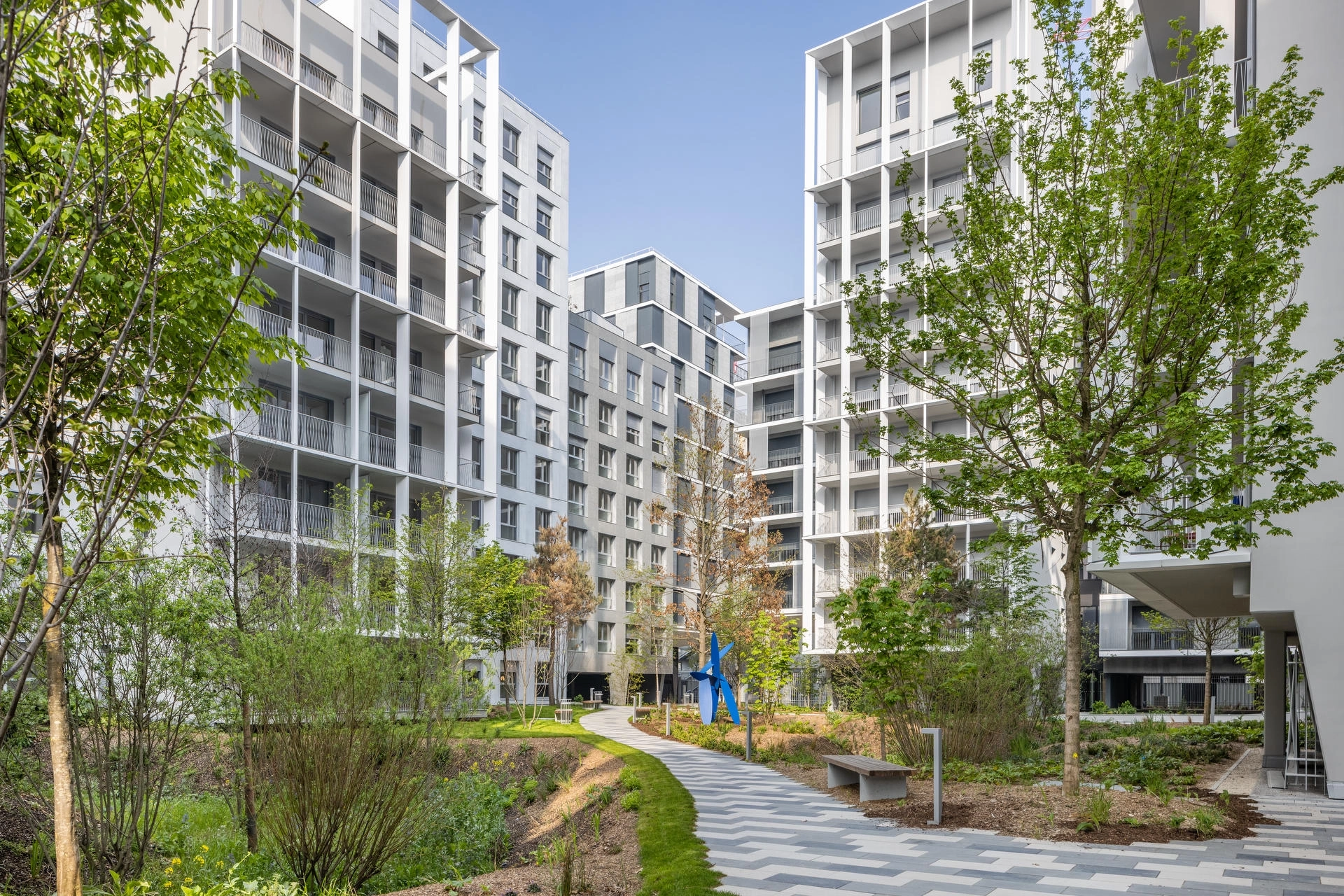
In architectural photography, a building can never be considered an isolated object. Its immediate environment—the neighborhood, landscape, urban or natural setting—plays a determining role in how the project is perceived. Photographing only the architecture without taking its context into account provides an incomplete, and sometimes misleading, reading.
My approach consists of integrating the building into its real ecosystem in order to produce images that are accurate, readable, and consistent with the architectural intent.
Architecture Always Dialogues With Its Environment
A building is designed for a specific location. Orientation, openings, volumes, and materials are all planned in relation to what surrounds it. In architecture photography, ignoring this environment amounts to erasing a part of the project.
In a dense urban context, I work with visual constraints, neighboring lines, and perspectives, as I detail in my article on architecture photography in dense urban environments. Conversely, in natural or peri-urban areas, the landscape becomes a structuring element of the visual narrative.
Giving Scale and Meaning to Volumes
Context makes it possible to understand the true scale of a building. A facade photographed alone can seem monumental or, on the contrary, squashed. By integrating surrounding elements—neighboring buildings, vegetation, roads—the image gains clarity.
This approach is essential when photographing facades, as explained in Photographing Facades: Revealing a Building’s Architectural Identity. The wider frame places the project back within its architectural fabric.
Highlighting Layout and Architectural Choices
The context tells the story of why the building exists the way it does. A house opening onto a landscape, an apartment block shielded from overlooking neighbors, a public facility integrated into a neighborhood: every architectural choice makes sense when it is shown.
During my location scouting, which I consider a key step in the process (the importance of scouting before an architecture shoot), I identify the viewpoints that highlight this relationship between architecture and environment.
Meeting the Expectations of Developers, Architects, and Investors
For a developer or an architect, images do not merely serve to show a finished building. They must explain its integration, reassure, and help viewers project themselves. This is particularly true for real estate developments, where visual consistency plays a key role, as I discuss in Why real estate developers need consistent images for an entire program.
The context then becomes a full-fledged communication argument.
Building a Complete Visual Narrative
Including the environment structures a reportage: wide shots, transitions, details, indoor/outdoor relationships. This logic is part of my approach to creating cohesive series, detailed in Building a cohesive series in architectural photography.
An isolated image can seduce. A contextualized series tells a story.
Conclusion
In architecture photography, context is never secondary. It reveals the intelligence of the project, gives meaning to volumes, and reinforces the credibility of the images. Photographing a building without its surroundings diminishes its impact.
This is why I systematically integrate context into my reportages, in order to deliver images that are faithful, readable, and useful for the communication needs of architects, developers, and real estate professionals.