
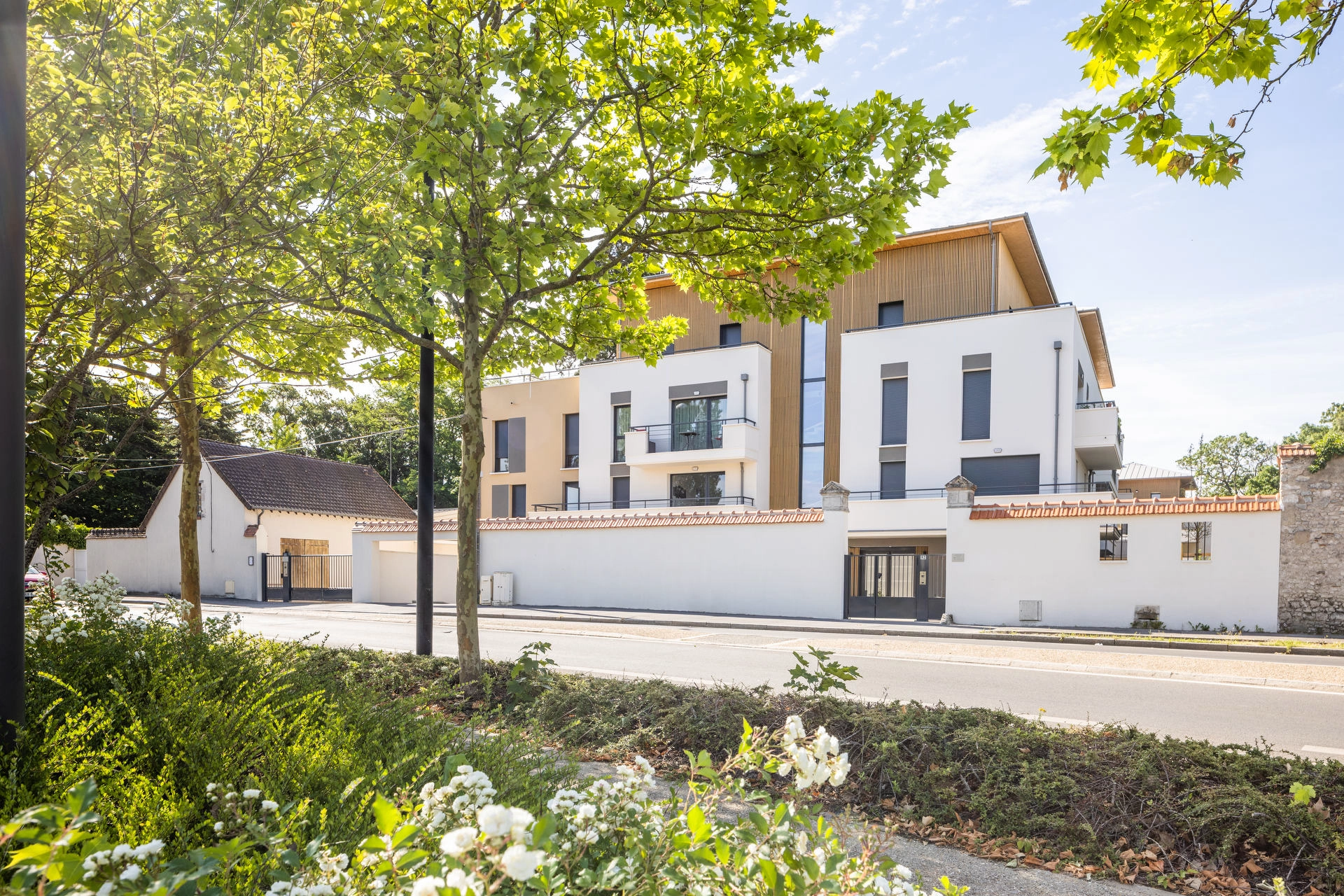
A building never exists in isolation. It is part of a street, a neighborhood, an urban or rural landscape. Yet, in architectural photography, there is a strong temptation to isolate the project to reveal its formal purity.
Photographing architecture from public spaces therefore raises a central question: how to frame without distorting? How do you show the building as it is perceived by users while respecting the architectural intent? This balancing act is at the heart of my photographic approach.
Public space as a natural viewpoint
The majority of buildings are first perceived from the street. It is from this shared space that passers-by discover the volumes, proportions, and materials. Photographing from public spaces means adopting the user’s real point of view. This choice anchors the project in its everyday reality.
As I often illustrate in my architecture portfolios, constraints related to traffic, opposing buildings, and dense urban environments should not be bypassed. They become elements to be integrated. The context is not an obstacle: it is part of the narrative.
Integrating without diluting
Including the urban environment carries a risk: diluting the reading of the project. Framing too wide can drown the building in its surroundings. Conversely, framing too tightly can distort the perception of its insertion.
The goal is to find the perfect point of balance. The context must serve the understanding of the project, not disrupt it. The building engages in a dialogue with its direct environment, and the final image must make this dialogue visible.
Dealing with urban constraints
In urban environments, public spaces impose strong constraints: car traffic, signage, street furniture, vegetation, pedestrians. The point is not to systematically erase them, as certain elements contribute to the reality of the place.
Photographing from the street requires precise anticipation:
- Choice of angle and focal length
- Shooting height (which directly influences the perception of volumes)
- Strict management of verticals
- Time of day to optimize light and foot traffic
Respecting proportions and the urban landscape
Public spaces rarely offer ideal distance. Narrow streets or restrictive plots force you to adapt the focal length. The risk is then to distort perspectives or exaggerate volumes. Preserving credible proportions and the accuracy of lines is essential so as not to distort the architect’s work.
Some buildings, especially in the commercial sector, are specifically designed to interact with their environment. Totally isolating the project would mean losing the entire meaning of its alignments or setbacks. This is an approach I particularly apply during the missions showcased in my Commercial Real Estate & Retail portfolio, where integration into the urban landscape (boutiques, headquarters) is paramount.
The human scale as a reference
Public space is a place of movement where human presence is natural. Integrating pedestrians into the image can reinforce the scale of the project and provide a much more realistic reading.
However, this presence must remain subtle. It must neither distract nor become the main subject. It is a balancing act between the formal purity of the architecture and the everyday urban reality.
Conclusion
Architecture seen from public spaces reveals how a building truly fits into the city. Photographing from the street involves dealing with constraints, integrating the context, and rigorously preserving proportions.
Framing without distorting requires technical rigor and narrative sensitivity. The image must restore the architectural intent while embracing the urban reality. To discuss showcasing your next project in its real environment, feel free to reach out via my Contact page.