
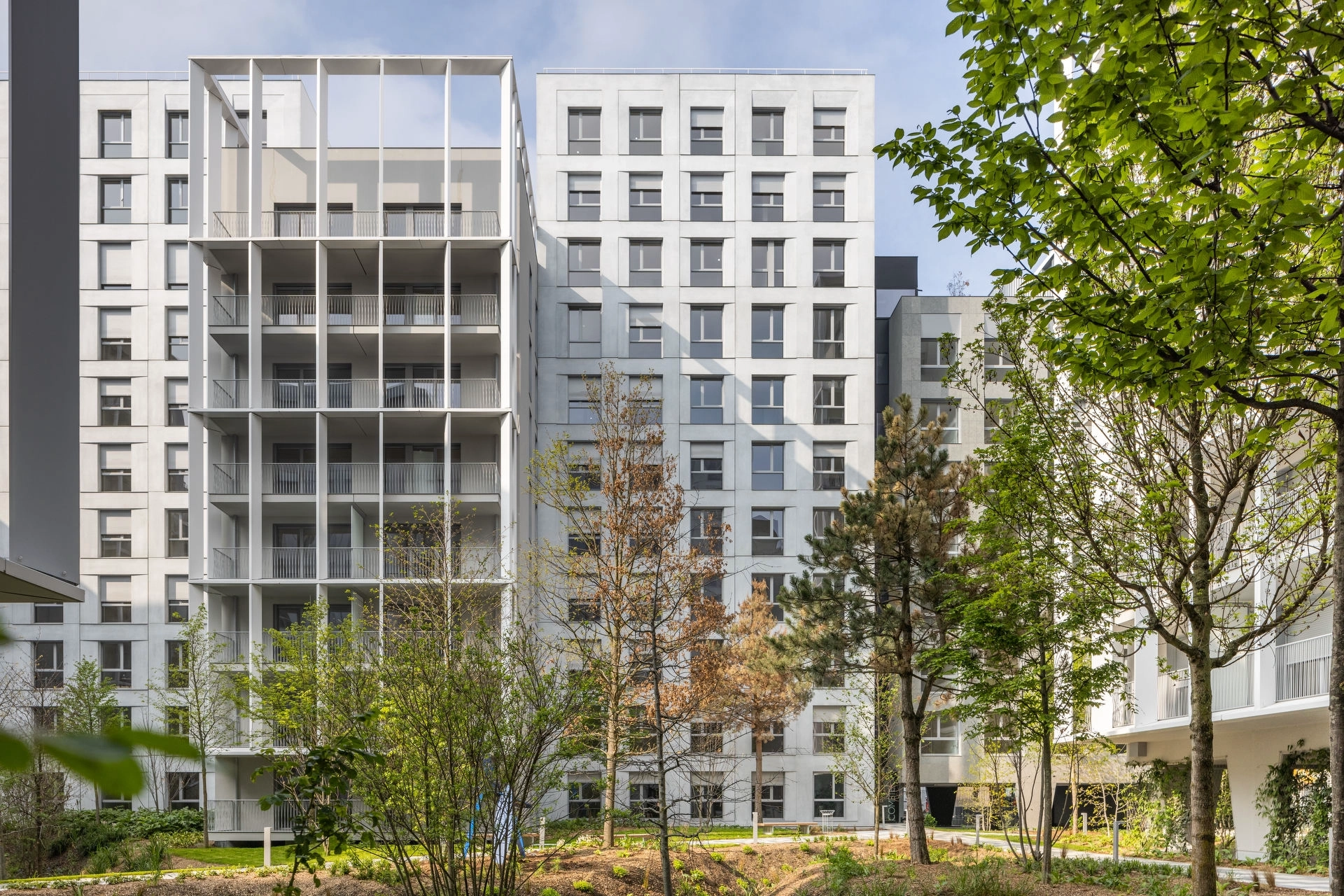
A building’s orientation directly influences how I prepare and execute an architectural reportage. Natural light, the path of the sun, shadows, volumes… everything depends on how the building sits within its environment.
For a developer, an architect, or a project owner, understanding this logic makes it clear why it is important to choose a photographer who can anticipate and master these parameters to guarantee a faithful and high-quality result. To learn more about my overall approach, you can visit my dedicated architecture photography page.
Why Orientation is an Essential Architectural Parameter
Orientation entirely structures the way a building receives light. A south-facing facade does not tell the same story as an east- or west-facing one. Light can reveal materials, soften volumes, or conversely, create overly harsh contrast.
To restore the true identity of an architecture, I must consider:
- Direct or indirect sunlight.
- Variations in brightness throughout the day.
- Structural shadow zones.
- The way textures react to light.
These concepts are closely tied to mastering natural light, a subject I explore in detail in my article: Capturing Natural Light in Contemporary Architecture Photography. Every facade has its own personality. By mastering these nuances, I guarantee consistent and representative images.
How the Sun’s Path Influences Each Facade
- East Facade — soft and progressive light: Morning light is ideal for revealing textures and details. It creates a delicate rendering, often very flattering for natural materials.
- South Facade — intense light and stark shadows: This is the highest-contrast orientation. It requires rigorous highlight management and sometimes mastered backlit shooting.
- West Facade — warm and atmospheric light: At the end of the day, the light becomes warmer and more enveloping. It helps create an elegant atmosphere, perfect for residential or hospitality developments.
- North Facade — diffused and homogeneous light: The light here is soft, stable, and even. It ensures a neutral rendering, faithful to materials and without harsh shadows.
These differences dictate the entire scheduling of the reportage.
Adapting My Approach Based on Orientations
For a complete reportage, I systematically organize my schedule around the orientations. This can take half a day or a full day depending on the complexity of the project:
- I often start with the east facades at sunrise.
- I continue on the south facades when the light is higher.
- I photograph the west sides late in the day to capture their natural warmth.
- I save the north facades for moments when the light is uniform.
Every series of images must maintain overall consistency: angles, compositions, contrast management, and perspectives must serve the architectural reading. I explain this logic in more detail in the article Building a Coherent Series in Architecture Photography.
When Orientation Completely Changes the Mood
Certain orientations create specific atmospheres that directly influence my artistic choices:
- South Exposure: I use shadows as graphic elements to structure the image.
- North Exposure: I highlight the softness of hues and the fidelity of materials.
- Backlighting: I finely master its balance to preserve details.
These atmospheres become true narrative tools when building the series.
The Role of Weather in Managing Orientation
The weather can be an ally or a challenge. A blue sky accentuates the directionality of the light, while an overcast sky can soften an overly contrasted south facade.
Depending on the conditions, I adapt the order of my shots, I take advantage of clouds to tone down contrasts, and I return to certain angles at the most opportune moments. This flexibility is absolutely vital to achieve a harmonious result.
Conclusion
Orientation is a fundamental parameter in architecture photography. By mastering it, I guarantee consistent images, faithfully represented materials, highlighted volumes, and a more professional marketing folder. This meticulous preparation and precise reading of light transform a reportage into a powerful visual tool for developers, architects, and project owners.