
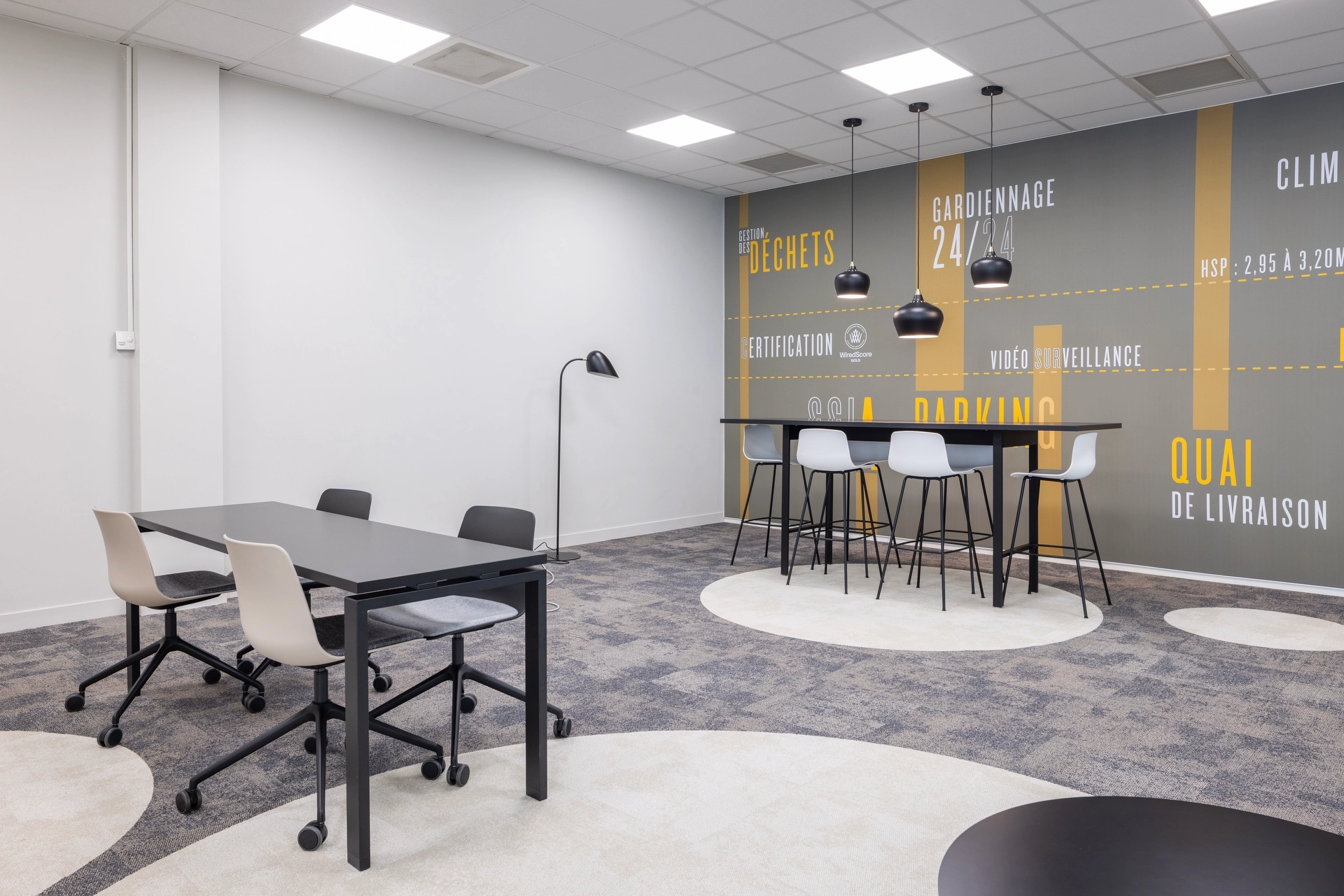
The world of work has radically changed. After the upheavals of recent years and the widespread adoption of hybrid work, the office is no longer an obligation; it must become a destination. For companies, developers, and interior designers, the challenge is no longer just providing square footage and an internet connection, but offering a place for living, interacting, and creating.
In this context, commercial real estate photography has also had to evolve. It is no longer about documenting rows of empty desks, but about capturing a company’s spirit and the Quality of Working Life (QWL) it offers.
Selling a Culture, Not Furniture
The fundamental difference between residential and commercial photography lies in the message. Where residential sells intimacy, commercial sells dynamics. My goal, when photographing a headquarters or a coworking space, is to visually translate abstract concepts: transparency, collaboration, and innovation.
This requires an intelligent reading of the architecture. Glass walls are not simple partitions; they symbolize fluid communication. Informal areas (cafeteria, foosball tables, lounge corners) are not accessories; they embody conviviality. Phone booths and muffled alcoves represent focus. It is this visual storytelling that transforms walls into a genuine corporate culture.
Geometric Rigor: Organizing the Chaos of the Open Space
Technically, photographing an office floor is a compositional challenge. An open-space can quickly look like visual chaos: a forest of black screens, tangled cables, coats on chair backs, and misaligned seating. My role as a photographer here is akin to that of a stylist. Even before taking a shot, meticulous staging work is necessary: aligning seats to the millimeter, standardizing screens, and clearing surfaces.
The masterful use of wide-angle lenses is then crucial. It makes it possible to encompass the vastness of the volumes and show the floor’s seating capacity, while maintaining clear leading lines that guide the eye and avoid the oppressive “work factory” effect.
Task Lighting vs. Ambient Lighting
The other major challenge in commercial photography is light management. Workspaces often mix large bay windows with complex artificial lighting (neon tubes, LED panels). These light sources have very different color temperatures, sometimes creating unflattering green or cyan color casts that give the image a “clinical” or sad appearance.
Through precise post-production and color grading work, I ensure these color shifts are neutralized. The white of the desks must be pure; the light must feel stimulating and natural. A successful office image must give the impression of a healthy, airy, and energizing place.
The Recruitment Asset: The “Employer Brand”
Finally, it is essential to understand that these images are strategic assets. They will not solely be used on real estate rental platforms. They are destined to feed the company’s “Careers” site, its LinkedIn pages, and its presentation brochures for investors.
In a fierce war for talent, the work environment is a decisive factor for candidates. Professional, bright, and polished photography sends a strong message: “It’s great to work here.” It is an HR seduction tool as much as a sales tool.
Conclusion
Your premises are the first physical showcase of your company. Whether renting them, selling them, or using them to attract top talent, they deserve an image that matches your ambitions.
Do you want to enhance your professional spaces? Discover my corporate real estate portfolio.