
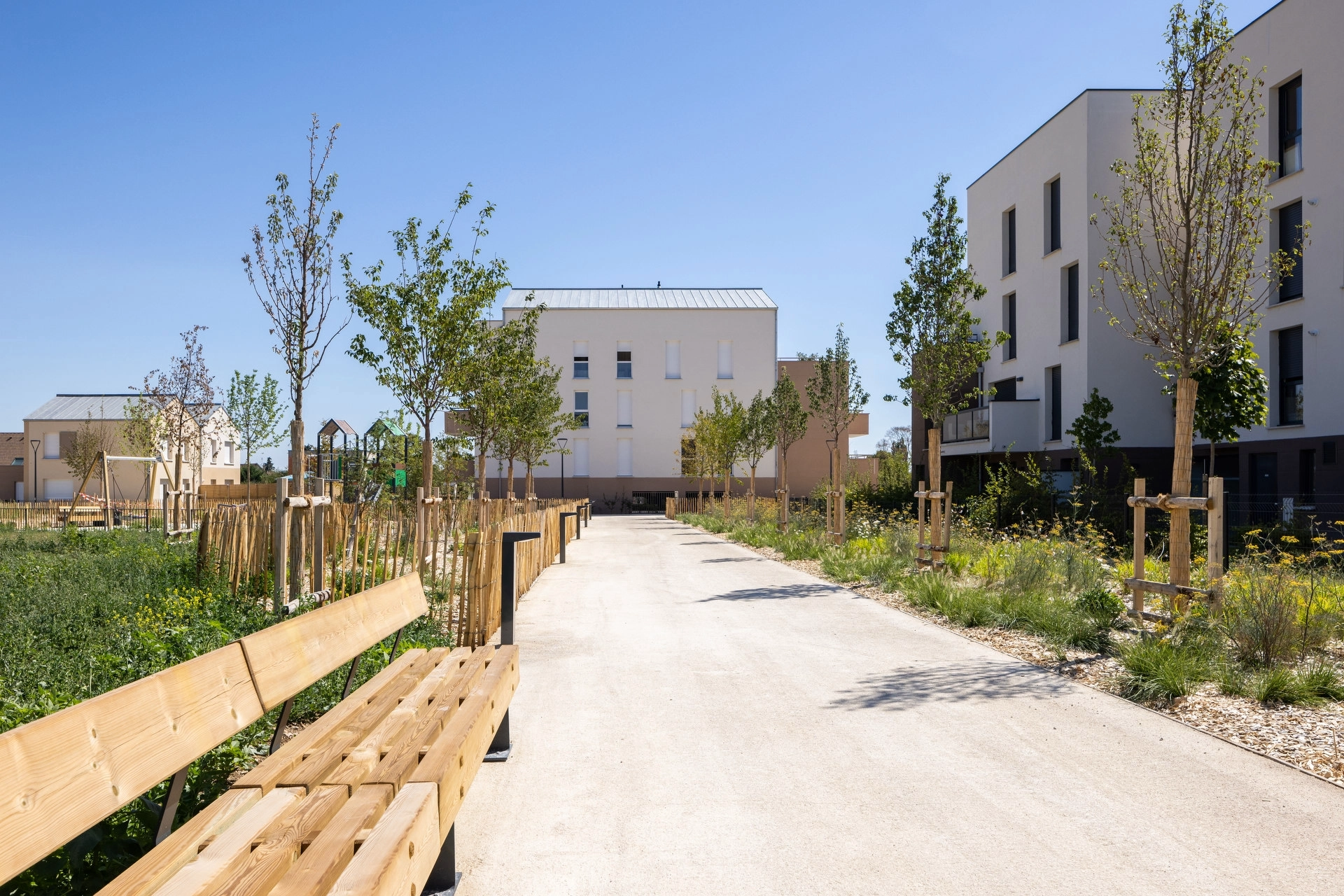
I am often asked the question: “What is the difference? After all, it’s just taking a picture of a building, right?” The answer is no. Although the subject is the same (a location), the intention, the technique, and the final result are radically different.
As a professional practicing both real estate photography and architecture photography, I juggle these two approaches on a daily basis. Understanding their nuances will allow you to choose the service that truly matches your needs.
The Objective: Selling Square Footage vs. Selling a Design
The fundamental difference lies in the intent:
- Real estate photography is transactional. Its goal is to trigger a visit to sell or rent a property quickly. The heroes are volume, brightness, and functionality. We aim to show “the entire space.”
- Architecture photography is heritage-oriented and artistic. Its goal is to document the quality of a design for an architect’s portfolio or a developer’s brand image. The heroes are the details, the lines, the materials, and the creator’s intent.
Technique and Time: The Sprint vs. The Marathon
The pace of work has nothing in common. In real estate, efficiency is key. Wide-angle lenses are often used to maximize space, and the shoot must be fast (1 to 3 hours) so as not to disturb the occupants.
In architecture, we take the time to observe. I wait for the light to be perfect, I move furniture to balance the composition (“Styling”). I use specific gear, notably tilt-shift lenses to guarantee perfect perspectives, as I explain in my article on the impact of the Tilt-Shift lens. A shoot can last an entire day for just 10 exceptional photos.
Post-Production: Realism vs. Sublimation
Image processing (retouching) also differs significantly.
- Real Estate: Retouching must remain light and faithful so as not to deceive the buyer. We correct exposure and color balance.
- Architecture: This is high-end, meticulous work. We erase unsightly elements (electrical outlets, access panels, emergency exit signs), clean the floors, and work on local contrasts. To understand this level of detail, I invite you to read my article on post-production in architecture.
The Question of Rights (Licensing)
Finally, image usage is not the same, which affects pricing. Real estate photography generally includes rights limited to the duration of the property’s sale. Once sold, the photos are no longer used. Architecture photography includes a broader and longer transfer of rights, because the images will be used for years on your website, in the press, or in competitions. This is a complex subject that I detail in my article on understanding licensing rights.
Conclusion
Neither approach is “better” than the other. They simply meet different objectives. If you want to sell a property, choose the efficiency of real estate. If you want to sell your expertise and build your brand image, invest in architecture.
Have you identified your need? Let’s discuss your next project.