
In the real estate sector, not all images serve the same goals. Photographing a new development for a real estate developer does not follow the same logic as enhancing an old apartment for a real estate agency.
While the final medium may seem identical—website, listing, commercial brochure—the photographic approach differs profoundly. Understanding these differences allows you to adapt the visual strategy to the commercial stakes and the target audience.
New Real Estate: Architectural Precision and Corporate Image
In a new real estate development, photography often takes place at the time of delivery. At this stage, the building is technically complete, the materials are intact, and the volumes are perfectly readable. For a developer, the challenge goes beyond simply selling the last few lots: it is also about enriching their portfolio of references and strengthening their brand image.
Photographing a new development therefore follows a logic close to architecture photography. The mastery of lines, perspectives, and proportions becomes essential. A slight distortion can immediately alter the qualitative perception of the building.
I discuss the importance of this technical rigor in my article on the impact of the tilt-shift lens in architecture photography, a decisive tool for preserving perfectly straight vertical lines and realistic volumes.
Visual consistency is also central. For groups developing multiple operations, maintaining a homogeneous signature is strategic. I explain why in this article dedicated to the visual consistency of a real estate development, where I detail the direct impact of this homogeneity on a developer’s overall credibility.
Old Real Estate: Revealing Character and Potential
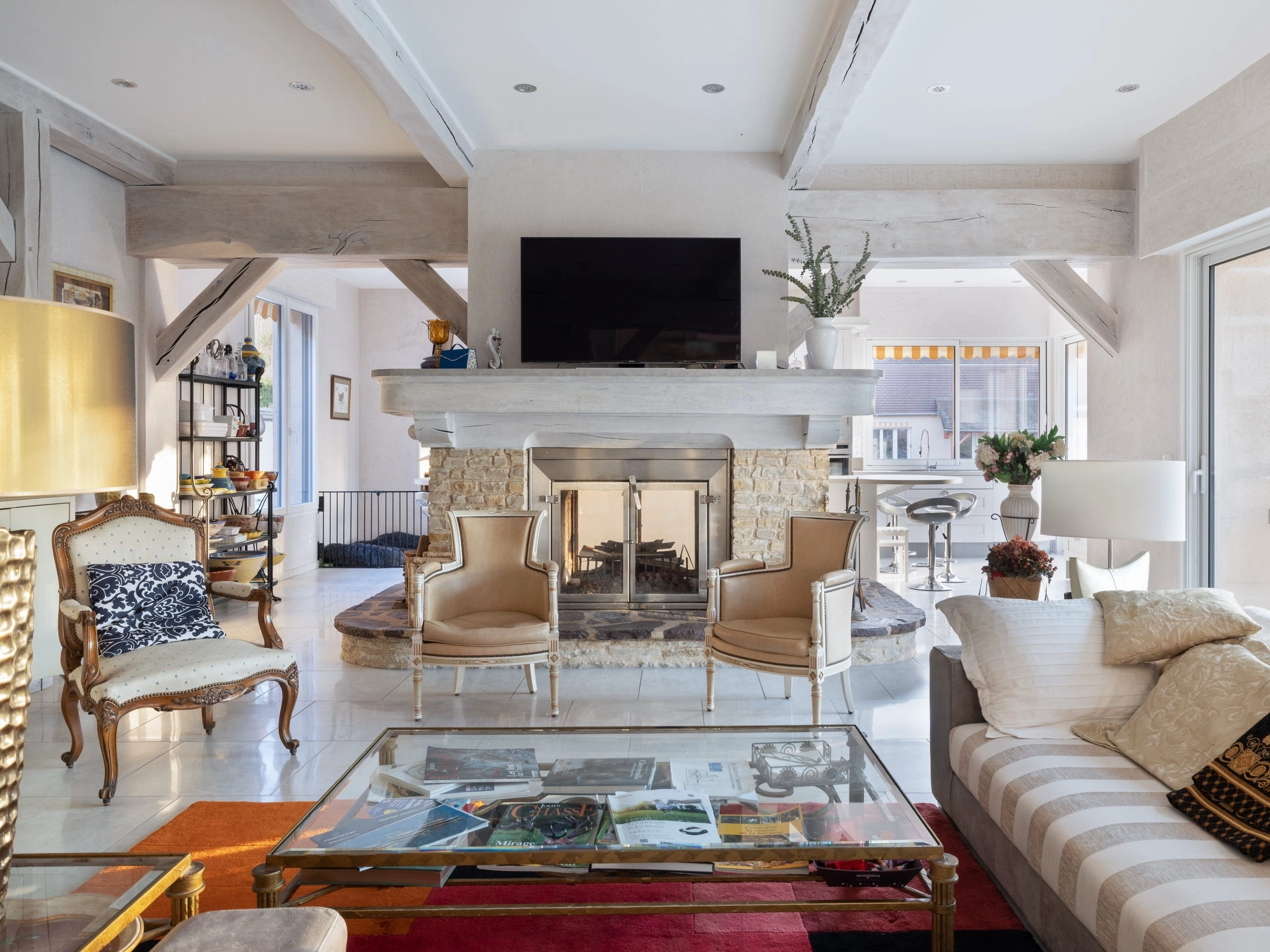
Conversely, older real estate relies more on emotion and character. A real estate agency must often highlight properties that are already inhabited, sometimes cluttered, with strong decorative elements.
Photography then becomes a tool of revelation. It is about highlighting the architectural cachet, original materials, and existing light without distorting reality.
In my article Photographing an inhabited interior: how to preserve the authenticity of the place, I explain exactly how to deal with furniture and personal elements without altering the property’s credibility. Preparation of the location is also decisive. I detail this step in Preparing a real estate shoot: the complete checklist, because image quality largely depends on the work done beforehand.
A Radically Different Approach to Light
Light constitutes one of the major differences between new and old real estate.
In new builds, openings are generally more generous. Bay windows, calculated orientations, and open spaces facilitate working with controlled natural light. I explain this approach in detail in Lights off or on? Why favor natural light.
In older buildings, light can be more complex to balance. Windows are sometimes smaller, rooms more partitioned. Backlighting then becomes a strategic tool when mastered properly, as I detail in Backlighting in real estate photography.
Different Commercial Goals
For a real estate developer, photographing a new program serves several purposes: feeding the website, illustrating corporate brochures, enriching call-for-tender documents, or enhancing future operations.
In this context, the image becomes a durable strategic asset. I address this role in The importance of the photographer in marketing materials, where I show how photography directly participates in building a solid professional image.
For a real estate agency working with older properties, the goal is often more immediate: generating viewings quickly. The quality of the images strongly influences the perception of standing, as I analyze in Real estate photography: how images influence the perception of a property’s standing.
Common Areas: A Strategic Lever in New Builds
In a new development, common areas are a major selling point. The entrance hall, stairs, landings, or shared gardens contribute to the overall qualitative perception.
I develop this approach in Photographing the common areas of a residence, where I explain how to translate material quality and volume readability. The choice of focal lengths is decisive here to preserve natural proportions. I address this aspect in Choice of focal lengths in architecture photography: impact on volume perception.
Realism and Credibility: A Common Principle
Whether dealing with new or old real estate, one principle remains: preserving credibility. Excessive post-production can create disappointment during the physical visit. I analyze this risk in Why excessive image correction can harm a project’s credibility. Real estate photography must seduce without deceiving.
Conclusion
Entrusting a new development or an older property to a specialized photographer guarantees an accurate reading of volumes, masterful management of perspectives, strategic optimization of light, and visual consistency across all listings. To discover my complete approach, you can visit the Residential Real Estate page or contact me directly to discuss your project.