
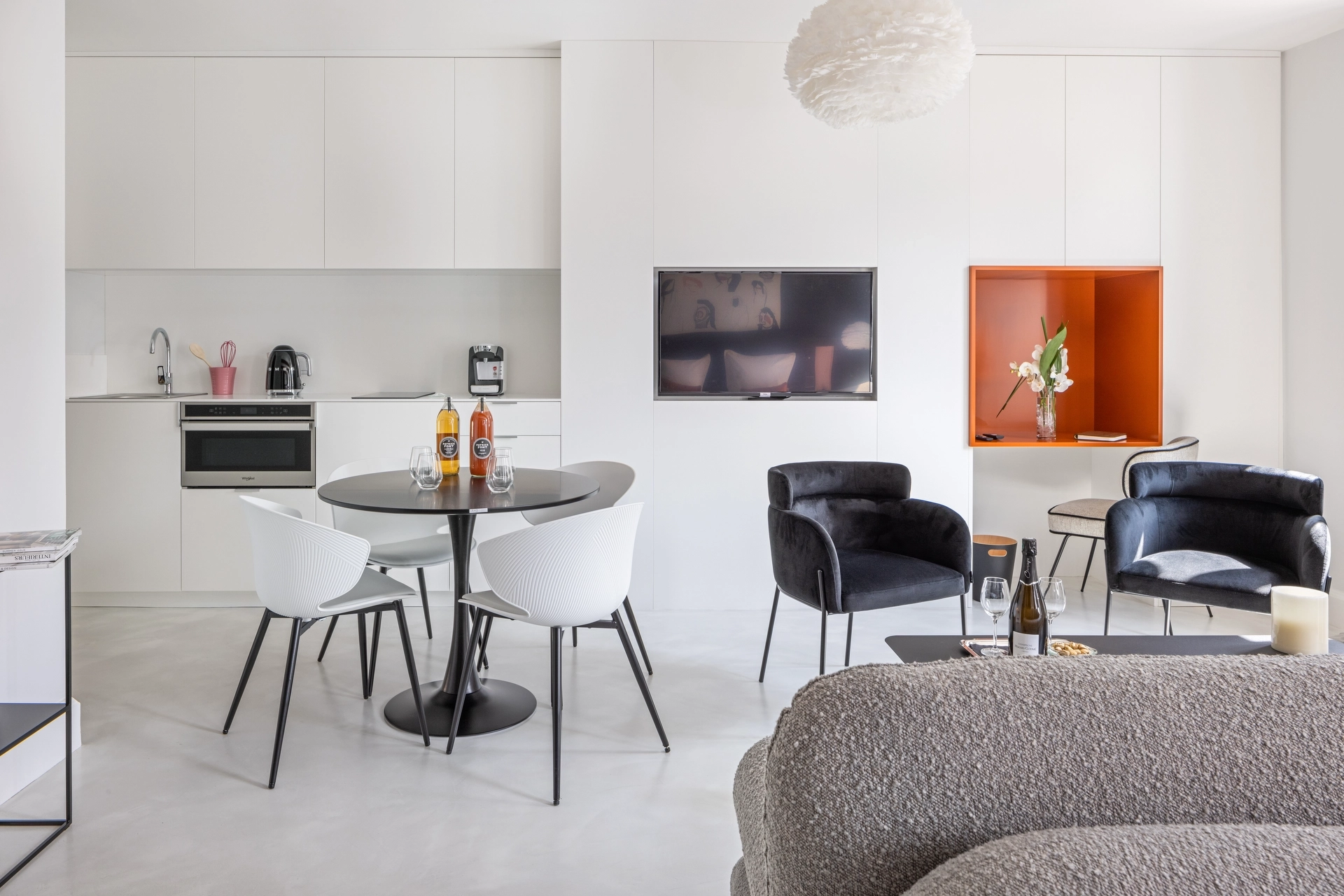
In a high-end interior, every element has a purpose: a mood, an aesthetic line, a standard of excellence. When I photograph this type of space, furniture becomes an essential landmark. It structures how the image is read, reveals the architecture, and conveys the standing of the location. My role consists of respecting this coherence while making it readable, elegant, and bright.
Furniture as the Baseline for Reading the Space
Furniture directly influences how an interior is perceived. In photography, it organizes the viewer’s gaze and helps them understand the volumes at a single glance.
It serves to:
- Direct lines and structure the image.
- Emphasize the proportions of a room.
- Reveal the architectural logic.
- Create visual anchor points.
A sofa aligned with an opening, a table placed in the axis of a perspective, or an armchair positioned to balance a wide shot… These subtle choices reinforce the readability of the space and make the composition much more harmonious.
Harmonizing Furniture, Light, and Materials
In a high-end interior, furniture always integrates into a broader ensemble: noble materials, textures, hues, and light sources.
I pay particularly close attention to this harmony, as it entirely influences the final mood. Furniture then acts as a balancing point between:
- The colors of a wall and those of the floor.
- The main materials.
- Natural light and its variations.
Working primarily with daylight, I seek to reveal the depth of materials and the softness of textiles. It is this exact consistency between furniture, light, and materials that provides a natural, refined, and warm result.
Adjusting Furniture Before Shooting
Before pressing the shutter, I observe the placement of the furniture and the lines it creates. Slight adjustments are often enough to improve the readability of an image:
- Repositioning a seat.
- Realigning a table.
- Decluttering a shelf.
- Removing a superfluous object.
- Creating negative space to let the composition breathe.
These interventions remain discreet and fully respect the interior designer’s or architect’s intent. They result in images that are clear, balanced, and faithful to the spirit of the project. For more details on my approach, you can read my article: Photographing an Inhabited Interior: Preserving Authenticity.
Furniture as a Narrative Tool
In a high-end interior, furniture doesn’t just dress a space: it tells a story. It expresses a lifestyle, a level of comfort, and a visual identity.
My goal is to translate this atmosphere accurately: an accent light, a repositioned cushion, a book placed with restraint… Every element helps create a realistic, elegant, and lively scene, without ever over-staging it.
The Art of Photographing Details
Details are essential in premium interior photography. They add a sensory dimension to the images and reveal the finesse of the project.
I pay special attention to:
- The quality of the materials.
- Finishes and assemblies.
- Carefully chosen accessories.
These close-up shots complement the overall views and reinforce the project’s identity. They allow the viewer to perceive the decorator’s high standards and the precision of the work done.
Conclusion
Photographing a high-end interior requires a keen understanding of the space and the creators’ intentions. Furniture plays a central role: it structures, sets the rhythm, tells a story, and reveals.
My job is to make this vision readable and elegant through a fluid reading of volumes, mastered natural light, precise framing, and consistency faithful to the location’s identity. Every image must translate the essence of the project and highlight the decorator’s or architect’s work with clarity and sophistication.
Are you an interior designer or architect? Explore my dedicated residential portfolio or contact me to photograph your projects.