
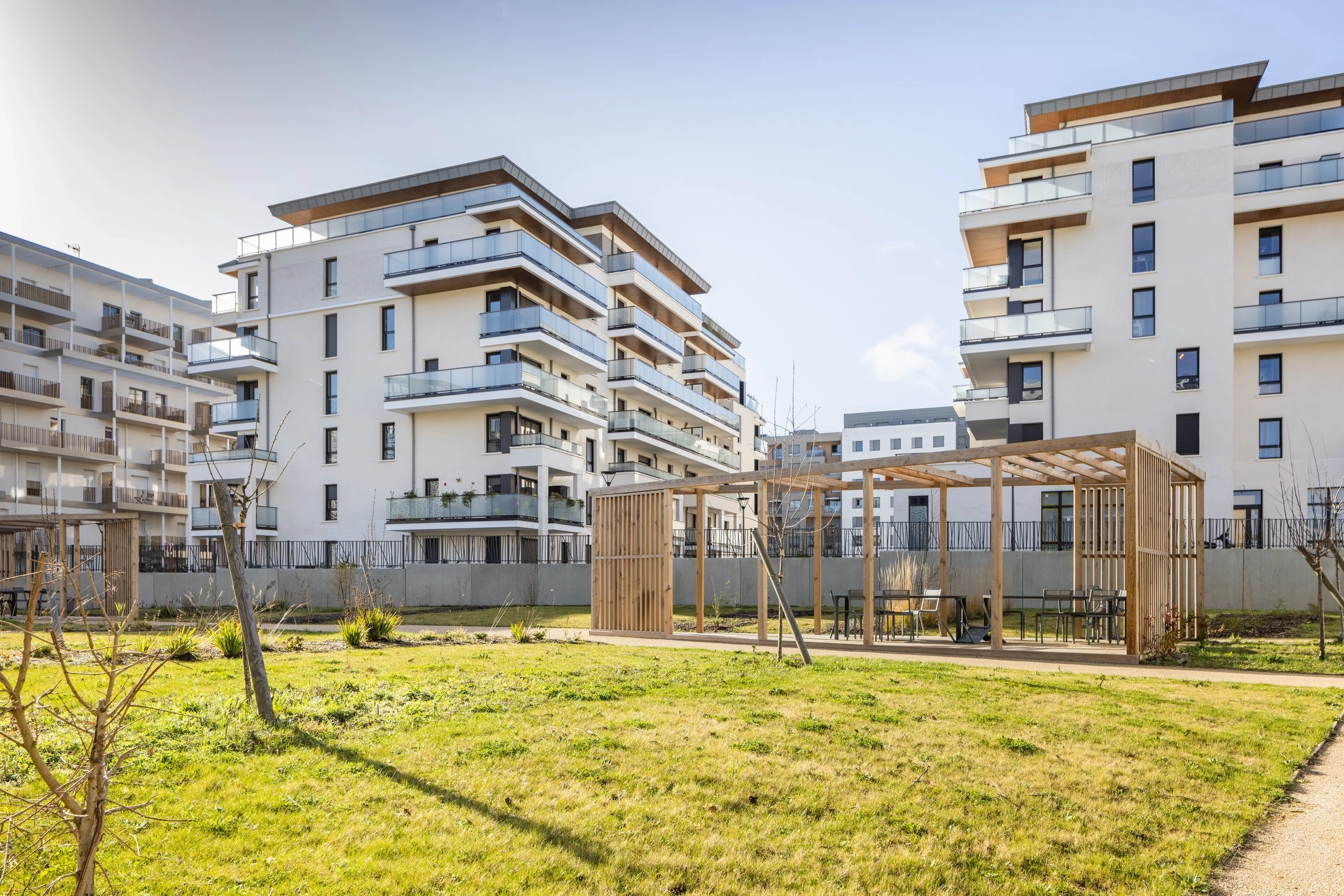
An architecture photo shoot requires meticulous preparation to ensure a faithful, homogeneous result adapted to the needs of developers, architects, or real estate agencies. Beyond equipment or post-production, everything relies on organization, the study of light, and a deep understanding of the project.
To discover my style and overall visual approach, you can browse my portfolio dedicated to architecture photography.
Precise Organization: The Foundation of a Successful Shoot
The success of an architecture shoot depends on anticipation. Before arriving on site, I analyze the building, its environment, technical constraints, the client’s expectations, and the available light. This preparation guarantees a professional, coherent result perfectly suited for your future communication materials.
Understanding the Project: Preliminary Discussions
Every mission begins with an in-depth discussion with the developer, architect, or real estate agency. I identify:
- The type of building and its identity.
- Architectural intentions.
- Priority zones.
- Key angles and moods.
- Final mediums: brochures, websites, call-for-tender folders, social networks.
I also analyze plans and renderings to anticipate the most relevant perspectives. For projects related to showcasing residential properties, you can discover my approach in my Residential Real Estate gallery.
Light Analysis and Choosing the Right Time
Light structures architecture. I systematically study:
- The orientation of the facades.
- Shadow zones.
- Weather conditions.
- The sun’s trajectory.
This analysis allows me to choose the most favorable moments for each facade. If you wish to learn more about timing management, I detail this subject in my article: Why a Building’s Orientation Radically Changes the Photographic Approach.
Equipment Preparation
I select the equipment based on the building and the objectives:
- Ultra-wide-angle lenses for volumes.
- Adapted focal lengths to isolate details.
- Tripod for flawless straight lines and verticals.
- Specific filters when necessary.
- Tilt-shift lenses to counter optical distortions.
I also plan for native dual-slot recording on my camera to secure your files immediately.
Coordination with the Client and Occupants
Fluid communication is essential. I coordinate with the project owner, on-site technical teams, site security, or even occupants if the building is already active. I also offer light styling when necessary (tidying up, harmonizing, small staging setups).
The Logical Flow of a Shoot
To guarantee a coherent visual narrative, I always organize the shoot in three main stages:
- Exteriors: early in the morning or late in the day to benefit from soft light.
- Interiors: seeking a natural and balanced luminous atmosphere.
- Details: materials, textures, finishes, architectural signatures.
I sometimes capture different light variations to offer multiple readings of the same space. On the crucial topic of on-field organization, you can consult my article: The Importance of Scouting Before an Architecture or Real Estate Shoot.
Image Selection with the Client
At the end of the shoot, I carry out a rigorous pre-selection. Together, we validate the final images and the desired retouching directions: color consistency, perspective corrections, and complete harmonization of the series.
Conclusion
Solid preparation, precise light analysis, and effective coordination allow for homogeneous, reliable images adapted to the needs of developers, architects, landlords, and real estate agencies. Each project benefits from a clear and mastered workflow, designed to guarantee a 100% professional result.
Ready to organize the shoot for your next project? Let’s discuss it today.