
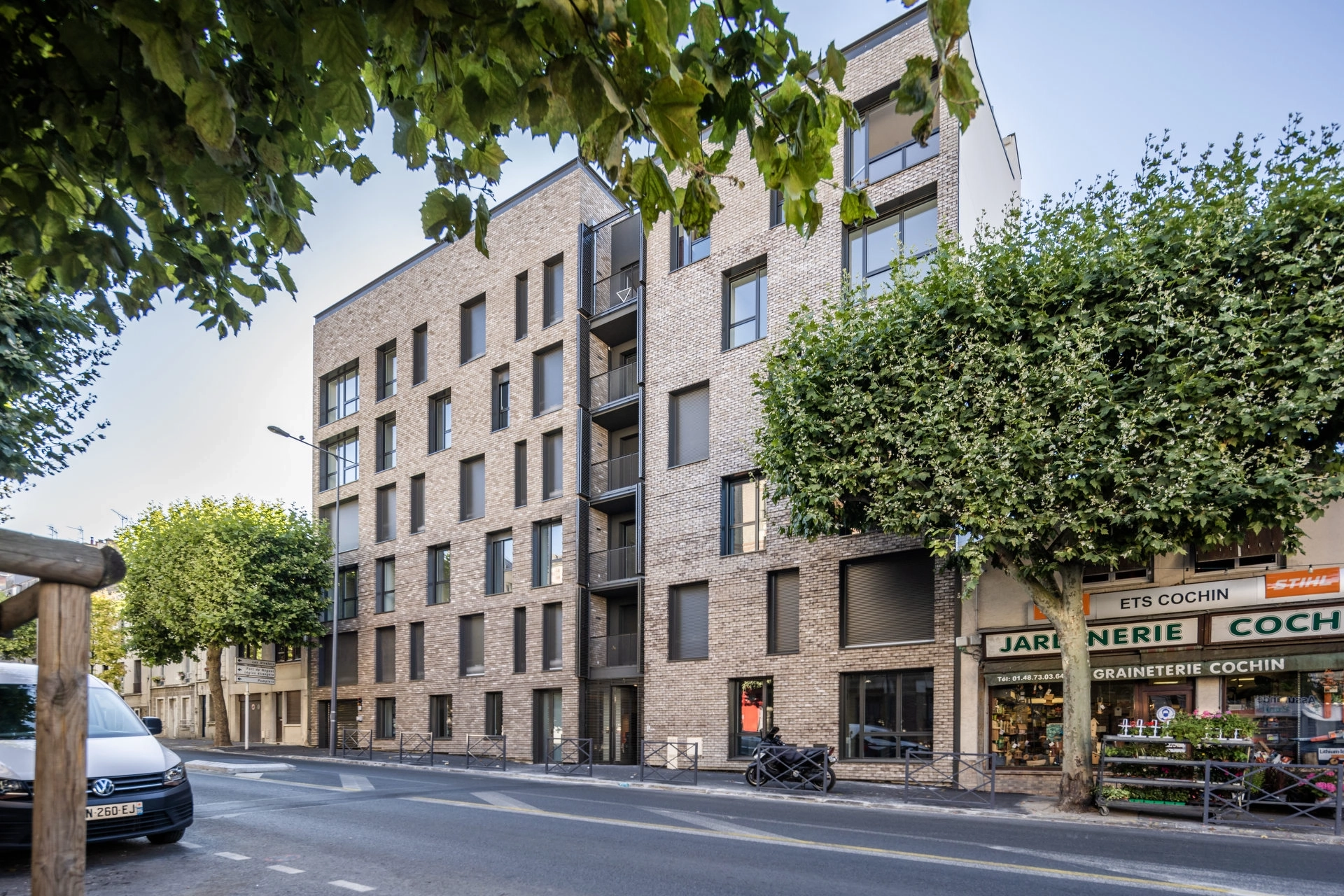
Photographing architecture in the city demands precise mastery of framing, light, and the urban rhythm. In a dense, cluttered, and constantly moving environment, every image must be built patiently. It is within these very constraints that photographs capable of revealing the beauty of an urban project are born.
I regularly work in complex urban contexts, notably in Paris and the major cities of the Île-de-France region. These environments require a methodical approach, constant adaptation, and an eye capable of turning obstacles into visual assets.
Identifying Urban Constraints
In the city, architecture photography confronts a multitude of elements that naturally disrupt the readability of the image: street furniture, vehicles, signage, cables, trees, pedestrians, and above all, a frequent lack of distance.
To restore the monumentality of a facade without distortion, I play with viewpoints, lens choices, height, or less immediate perspectives. These constraints, often considered obstacles, become genuine creative levers when anticipated properly.
The environment forces you to refine, structure, and rethink the composition to guide the eye despite the visual density. This work reveals the true essence of the building in a lively, and sometimes chaotic, context.
Finding the Right Angle and the Right Time
In urban settings, light changes rapidly. It interacts with glass facades, metal surfaces, stone, neighboring buildings, and cast shadows. Reflections become major actors—sometimes restrictive, sometimes perfectly enhancing.
Shooting at the right time is essential:
- Early morning to benefit from soft, low-angle light.
- Late afternoon when the sun creates warm reflections.
- Backlit when the volume of the building gains dynamic energy.
This sensitivity to light, detailed in my article on mastering natural light in contemporary architecture, allows me to reveal the uniqueness of every urban project.
Composing with Everyday Elements
The city never stands still. Photographing a building in a dense urban context means composing with constant flows: pedestrians, traffic, neighboring construction sites, neon signs, or seasonal vegetation.
Depending on the situation, these elements are integrated to provide a human scale or carefully removed through patience, multiple exposures, or discreet retouching. The goal is never to distort the environment, but to find the perfect balance between authenticity and architectural readability.
The Importance of Scouting
Every urban shoot begins with a crucial scouting phase. This allows me to anticipate:
- The most relevant angles.
- Visual obstacles.
- Ideal lighting hours.
- Potential access constraints.
- Local traffic.
In a city like Paris, where light changes drastically from one street to the next, this step guarantees the visual consistency of a series. It also helps in understanding the architect’s intention: orientation, volumes, relationship to the street, and alignments. This preliminary look is decisive in accurately restoring the project.
Transforming Urban Constraints into Creative Sources
Photographing architecture in a dense urban environment requires accepting the unexpected and using it. Spatial, luminous, or human constraints become allies in the creation of lively, dynamic, and expressive images.
My role is not limited to documenting. I interpret, simplify, and reveal the coherence of a project in the middle of a complex environment. This approach combines technical rigor and artistic sensitivity to deliver images that present the building in its rightful place within the city.
Have an urban building you need to showcase? Explore my architecture portfolio or let’s discuss your project together.