
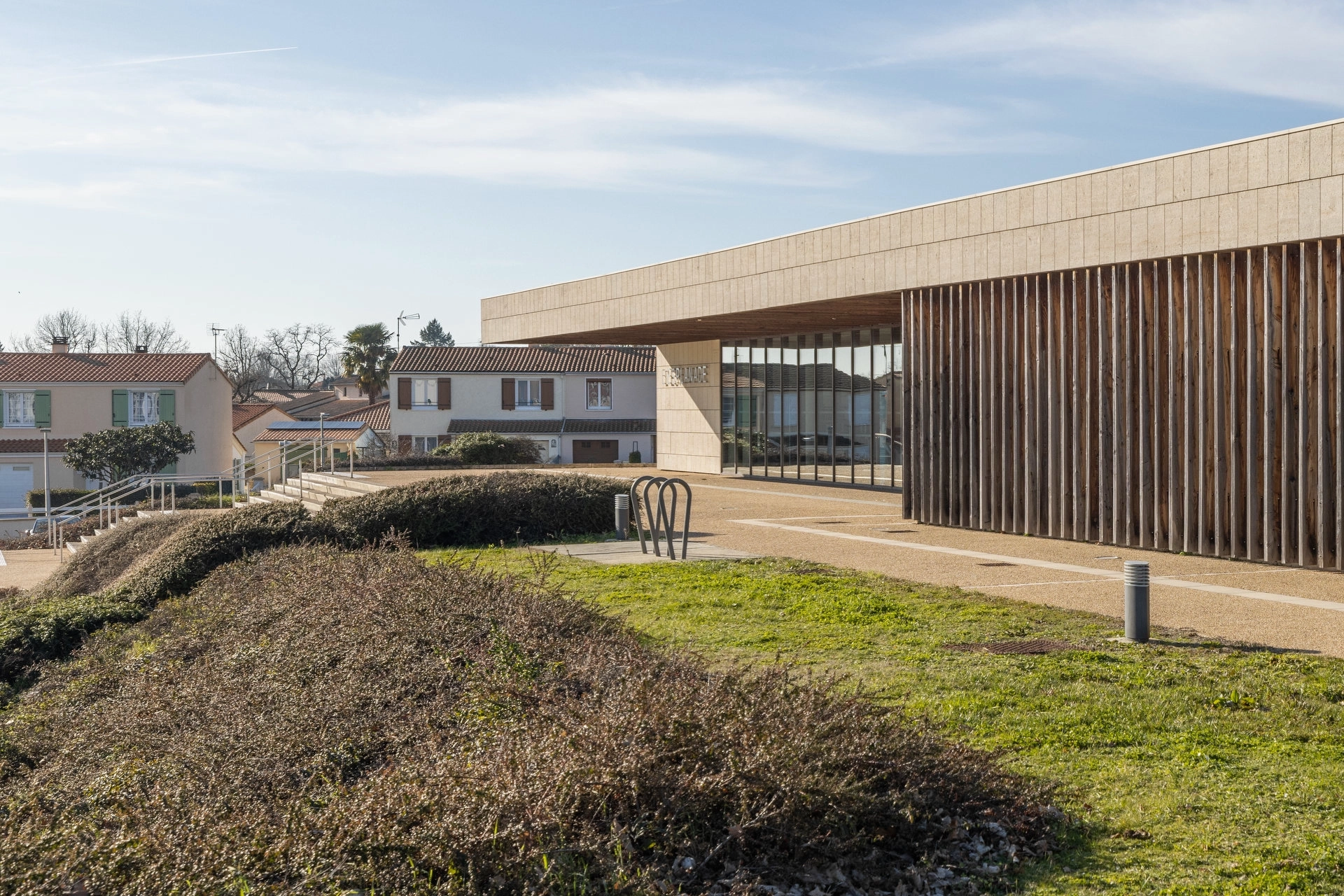
A facade is much more than an envelope: it embodies the identity of a building, the signature of an architect, and the first impression left on visitors. Through my eye as an architecture photographer, I seek to reveal the personality of a place, translating its lines, materials, and interaction with the surrounding environment.
Understanding the Architectural Project
Before pressing the shutter, it is essential to understand the project as a whole. Every facade translates an intention: opening up to the city, protecting privacy, or creating a dialogue between the interior and exterior.
I analyze the materials, orientation, geometry, and the designer’s intentions to adapt my approach. A raw concrete facade is not photographed in the same way as a glass or wood-clad facade. This observation phase allows me to grasp what the architect wanted to express and restore its visual coherence through my images. This understanding is the foundation of any successful architecture photography.
Choosing the Right Angles
Finding the right viewpoint is a balancing act between technique and intuition. Natural light plays a major role here: it highlights volumes, creates cast shadows, and brings out textures.
I often plan my shoots according to the path of the sun to capture the moment when contrasts are the most accurate and expressive. Perspectives amplify the architectural reading. A low-angle shot enhances a building’s monumentality, while a frontal axis reinforces symmetry and the strictness of the lines. This precise framing is essential, particularly in my work for commercial real estate projects.
Composing with the Environment
A facade does not exist in isolation: it dialogues with its urban or landscape context. In my reportages, I integrate these elements (vegetation, roads, reflections, sky) to anchor the architecture in its real environment.
Whether it is a contemporary suburban residence, a renovated Haussmannian building, or a public facility, the composition must tell a story: that of a project rooted in its territory, connected to the light and movement of daily life. When dealing with buildings open to the public, I apply the same approach as in my retail photography, seeking to restore the consistency between the exterior facade and the interior customer experience.
Subliming the Materials
Photographing a facade also means highlighting textures, reflections, and the interplay of materials. I pay special attention to the way light glides over glass, catches on metal, or reveals the exact shade of plaster. These details add depth to the image and convey the quality of the construction.
In post-production, I ensure a natural rendering: color and brightness retouching aims solely to restore the true perception of the architecture, without altering its atmosphere. This rigorous editing process also applies to my construction site reportages, where color and material fidelity are absolutely essential.
Conclusion
Facade photography sits at the crossroads of documentary work and artistic interpretation. It adds immense value to a project, conveys its consistency, and preserves its memory. Through a rigorous and sensitive approach, I aim to reveal this identity, translating the designer’s intentions through bright, balanced, and faithful images.
Looking to highlight a recently completed building? Explore my architecture photography portfolio or let’s discuss your project.