
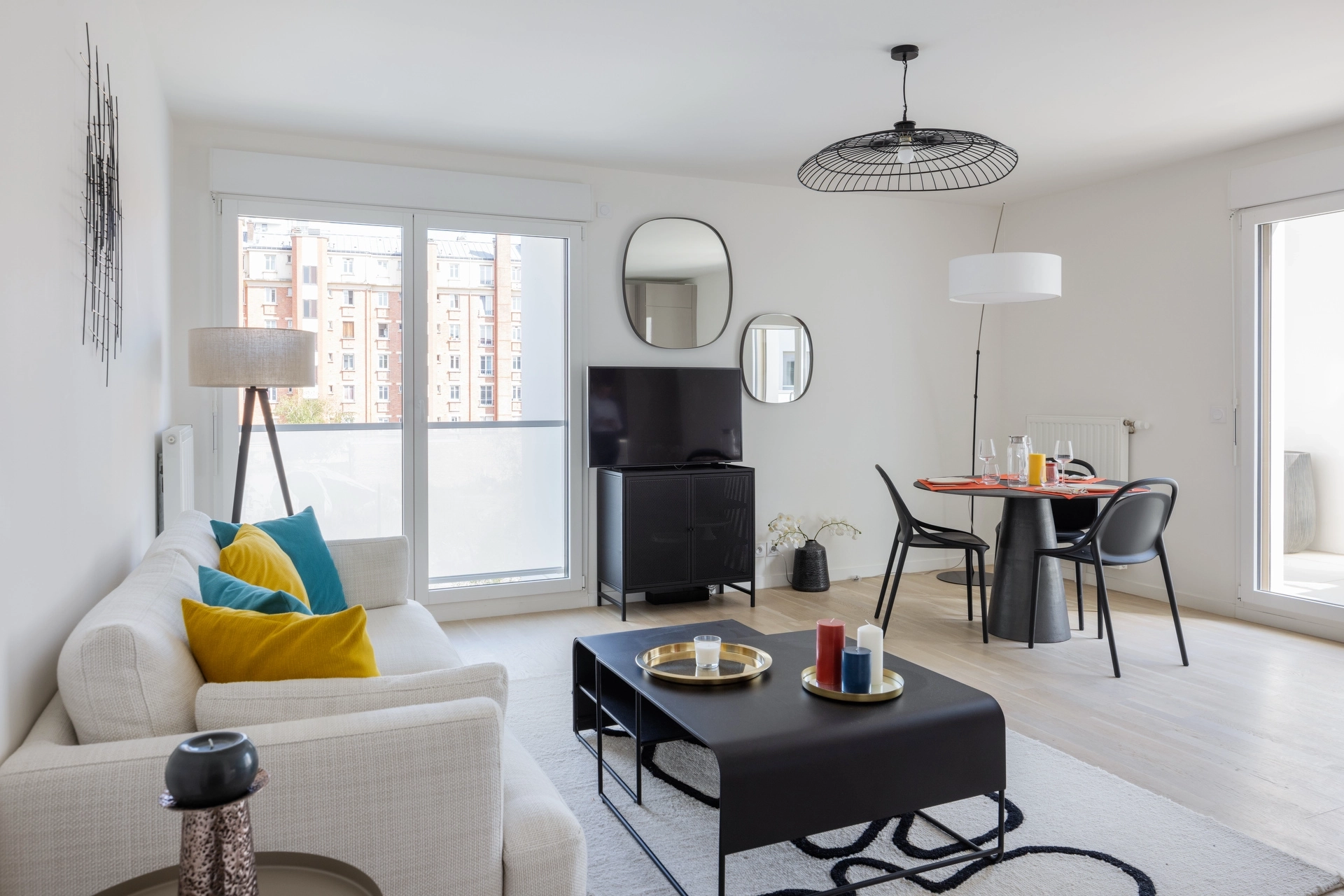
The model home is an essential tool for highlighting a new real estate development. It allows future buyers to instantly project themselves into a finished, bright space that matches the project’s standing. Professional photography plays a key role here: it creates that initial “love at first sight” feeling and conveys the quality of the development long before the on-site visit.
In my work as an architecture and real estate photographer, I seek to produce a vision that is realistic, welcoming, and entirely faithful to the developer’s positioning, all while sublimating the space to reinforce its appeal. To delve deeper into this subject, you can also visit my dedicated architecture photography page.
Why the Model Home is Important for Selling a New Development
A well-photographed model home strengthens the commercial impact of a development by immediately clarifying:
- The overall quality of the project.
- The architectural intentions.
- The general atmosphere.
- How the volumes can actually be lived in.
Professional images create a strong first impression, a vital step to encourage visits and speed up the decision-making process. I also discuss this in my article on luxury real estate photography, where I explain how light and visual consistency influence qualitative perception.
Analyzing the Space: Understanding Intentions and Expectations
I begin every shoot with an in-depth analysis phase:
- Studying the floor plans.
- Understanding materials and finishes.
- Reading the decorative scheme.
- Analyzing the orientation and natural light intake.
- Identifying the key rooms to highlight.
This preparation helps me determine what needs to stand out in the series: the flow of movement, the reading of volumes, the lighting mood, or the decorative coherence. Before shooting, I sometimes suggest a few simple adjustments: decluttering, repositioning a piece of furniture, or toning down an overly present decoration.
Building a Realistic yet Appealing Vision
The goal is to provide a credible staging inspired by real life. To achieve this, I make sure to:
- Respect true sizes and proportions.
- Use functional and understated accessories.
- Let the space breathe to avoid an overly “catalog” look.
My Lighting Approach
Light is a central element when photographing a model home. I favor natural atmospheres, playing with contrasts and shadows to give depth to the images.
When necessary, I add soft lighting to balance the whole and create a warm atmosphere. This approach is detailed in my article: Capturing Natural Light in Contemporary Architecture Photography.
My Framing Choices to Tell the Space’s Story
To offer a fluid and honest reading of the property, I combine various frames:
- Wide shots to understand the volumes.
- Close-up shots to highlight textures and finishes.
- Straight perspectives to maintain architectural rigor.
- Views of the hallways and flow to help buyers visualize how to live in the space.
These choices make it possible to build a clear visual narrative, room by room.
Realism as the Key: Avoiding the “Too Perfect” Effect
A model home must seduce, but without falling into an artificial rendering. To maintain a welcoming realism, I favor:
- Natural color grading.
- Balanced brightness.
- Mastered perspective correction.
- Subtle retouching tailored to the development’s standing.
A Coherent Series to Boost Marketing
I always deliver a series designed for the needs of real estate marketing: brochures, listings, billboards, platforms, and websites. My method relies on a consistent number of images per room, a structured visual narrative (entrance → living areas → sleeping areas), and global consistency in lighting.
This demand for consistency follows the exact same logic described in my article: Why Real Estate Developers Need Consistent Images for an Entire Development.
Conclusion
Photographing a model home is about building a bridge between the architecture and the future buyer’s imagination. My approach relies on credible staging, mastered light, a fluid visual narrative, and consistency faithful to the development’s identity. Developers are thus equipped with a powerful tool capable of triggering a crush and supporting every step of the sales process.
Are you launching a new real estate development? Contact me to showcase your model homes.