
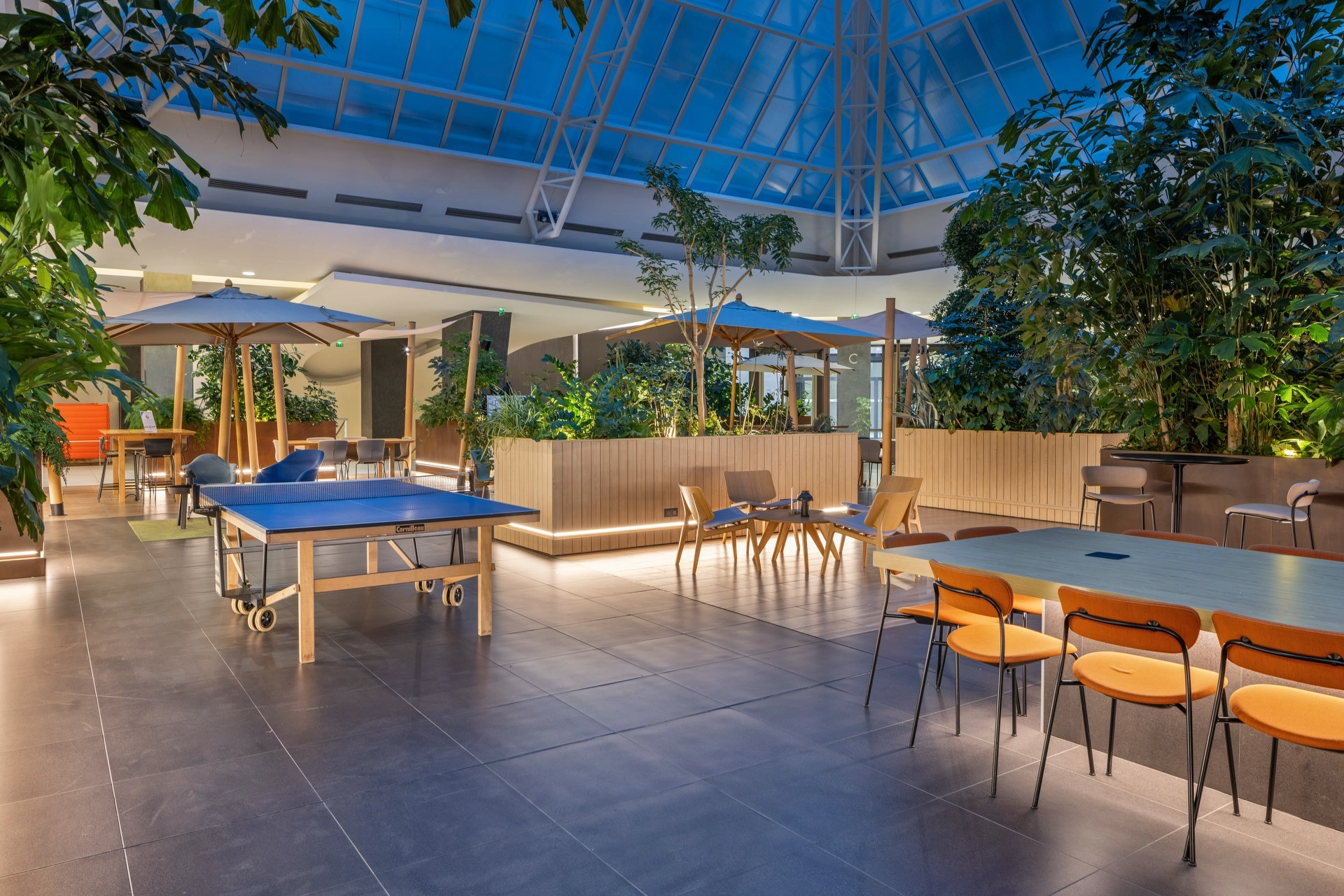
Photographing a space at night demands special attention: volumes evolve, materials gain relief, and artificial lighting redefines the entire atmosphere.
In my reportages for architecture photography, interior photography, or retail stores, I always rely on how light embodies the identity of a place. My goal is to preserve this mood while creating images that are readable, warm, and faithful to the designer’s intent.
Understanding the Designer’s Lighting Intent
Before taking any shots, I analyze the lighting composition imagined by the architect or designer:
- The color temperature of the lights.
- Intensity and distribution.
- Highlighted zones.
- The decorative role of the light fixtures.
This step is essential in interior decoration photography, where every light source serves the materials and lines of the project. Whenever possible, I speak directly with the designer to fully integrate their vision into my workflow.
Anticipating Technical Challenges Linked to Artificial Lights
At night, artificial light often generates complex situations: warm color casts, mixed temperatures, harsh glares, or difficult-to-control reflections.
During my nocturnal architecture shoots, I take action right from the camera:
- Precise exposure control.
- Choosing an angle that minimizes color shifts.
- Neutralizing overly intense zones.
My objective is to stay faithful to reality while offering an image that is elegant, harmonious, and pleasant to view.
Composing with Contrasts and Shadows
Shadows play a full part in the nocturnal atmosphere: they sculpt volumes, enhance depth, and contribute heavily to the character of the location.
In my shoots for premium retail stores, hospitality spaces, or restaurants, I seek to balance dark areas and bright spots without flattening the scene. Contrasts become a true visual language that structures the image.
Adjusting the Lighting Without Altering the Location
Some spaces gain in consistency when slight lighting interventions are made:
- Dimming an overly powerful fixture.
- Turning off a source that washes out a wall.
- Favoring indirect light to soften the mood.
I also integrate exterior lighting (neon signs, streetlights, storefronts), which is particularly useful for my retail and concept store reportages. They enrich the scene while remaining natural. The challenge is to let the nocturnal atmosphere live without forcing it.
Color Management
Warm, green, or magenta color casts are frequent at night. I ensure a realistic chromatic consistency is maintained while respecting the location’s luminous signature.
In post-production, I make highly discreet corrections:
- Reducing overly pronounced color casts.
- Precisely adjusting the white balance.
- Preserving materials and textures.
This step is absolutely indispensable in my high-end interior reportages, where visual precision is paramount. To learn more, you can read my article on Color in Interior Photography: Finding the Balance Between Realism and Emotion.
Finalizing the Mood in Post-Production
During retouching, I intentionally remain subtle: recovering highlights, adjusting local contrasts, and applying a general harmonization to preserve the essence of the place.
Whether I am working for an architect, an interior design agency, a boutique, or a restaurant, my goal remains the same: to produce images that are faithful, sensitive, and perfectly consistent with the project’s atmosphere.
Conclusion
Photographing night spaces requires a delicate balance between technical mastery, sensitivity, and a deep understanding of lighting intent. By working with precision, I create images capable of fully showcasing the hard work of architects, decorators, and high-end retailers, while conveying the atmosphere, character, and elegance of the location.
Does your project truly shine after dark? Contact me to organize a twilight or nocturnal photo shoot.