
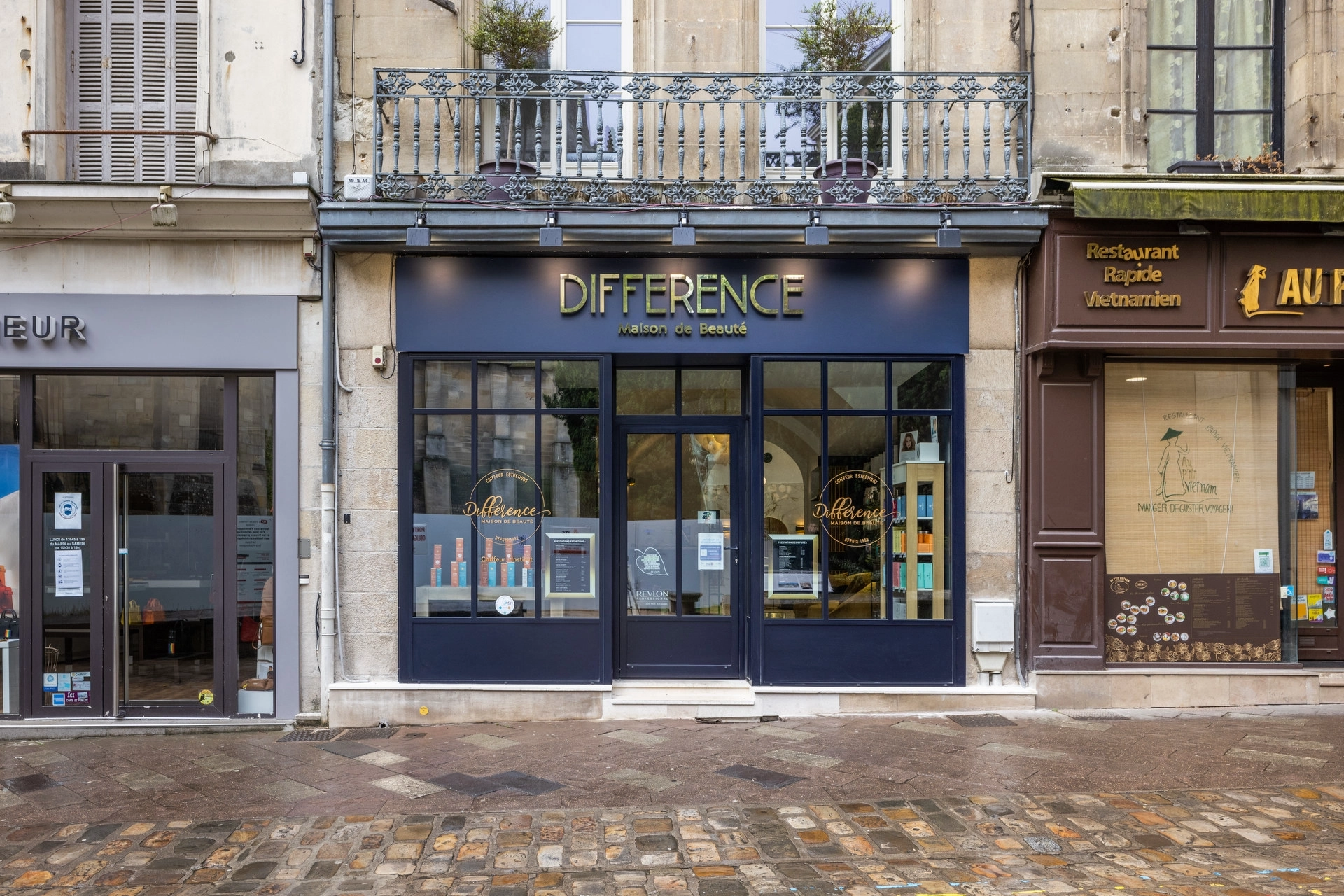
Even before a customer speaks to your salespeople or touches your products, they have already made a decision: to enter or keep walking. This decision is made in a fraction of a second, thanks to one thing: your storefront window.
In the digital age, the photo of your storefront has taken on paramount importance. It is often the first image that appears on Google Maps or Instagram. If it is dark, overrun with reflections, or poorly framed, you lose customers before they even arrive on your street.
As a photographer specializing in Retail, I consider the store window to be a high-precision exercise. It is not just architecture; it is pure marketing. Here is how I construct these images to turn passersby into customers.
Technical Challenge #1: Mastering Reflections
Photographing a window in broad daylight is fighting against a giant mirror. The street, cars, and passersby reflect in the glass, making the inside of the boutique invisible. To counter this, I use two techniques:
- The polarizing filter: This is an essential accessory screwed onto the lens that “cuts” a portion of the reflections, allowing you to see through the glass as if it weren’t there.
- Shooting time: I favor times when the outdoor brightness is slightly lower than the indoor brightness (late afternoon or overcast weather). This allows the light from the boutique to “pierce” outwards. It is a logic similar to the one I use to capture natural light in architecture: everything is about balance.
Architecture Serving the Brand
A window does not float in a vacuum. It is part of a building, a street, a neighborhood. For a brand, it is crucial to show how it integrates into its architectural environment.
Is it a Haussmann-style boutique with woodwork? A minimalist concrete concept store? I always frame wide enough to include part of the facade. This provides context and reassures the customer about the standing of the location. My experience in Architecture photography allows me to straighten the perspectives (vertical lines) so that the building appears stable and imposing, reinforcing the brand image.
Night: When the Window Becomes a Beacon
At night, the dynamic is reversed. Reflections disappear, and the window becomes a box of incandescent light in the middle of the darkness. It is often the best time for “Crush” photos.
However, photographing at night requires perfect mastery of artificial sources. LED spots, neons, and screens must be perfectly exposed so they don’t look “messy” or completely blown out (white) in the photo. As I explain in my article on nighttime spaces, the goal is to maintain the color fidelity of the displayed products while capturing the warm atmosphere emanating onto the sidewalk.
Visual Merchandising: The Devil is in the Details
A beautiful window photo must tell a story. This is the work of your Visual Merchandising (VM) teams, and my job is to enhance it. I do not settle for a wide shot. I take tight shots of the scenography:
- The texture of a garment on a mannequin.
- The geometric arrangement of products.
- The signage (stickers, logo on glass).
These details are essential for your internal reports (if you are a franchise network) to validate compliance with guidelines, as we saw in the article on photographer mobility for retail brands.
The Human Element: Adding Life Without Stealing the Show
An empty window can seem cold. A window with too many passersby becomes illegible. The secret is dosage. I like to include a blurred silhouette (a person walking) in the foreground. This gives a human scale to the boutique and suggests dynamism (foot traffic). It proves that your location is lively and frequented—a strong argument if you need to present these photos to investors or the real estate department.
Conclusion
The storefront window is the first physical touchpoint between your brand and your customer. On your website or social media, its photo plays exactly the same role: it triggers the click.
Don’t let unsightly reflections or haphazard exposure ruin your brand image. Whether you are an independent boutique or a large national brand, your windows deserve professional treatment.
Are you launching a new collection or opening a new point of sale? Let’s discuss the best way to capture your visual identity. Contact me for a custom quote.