
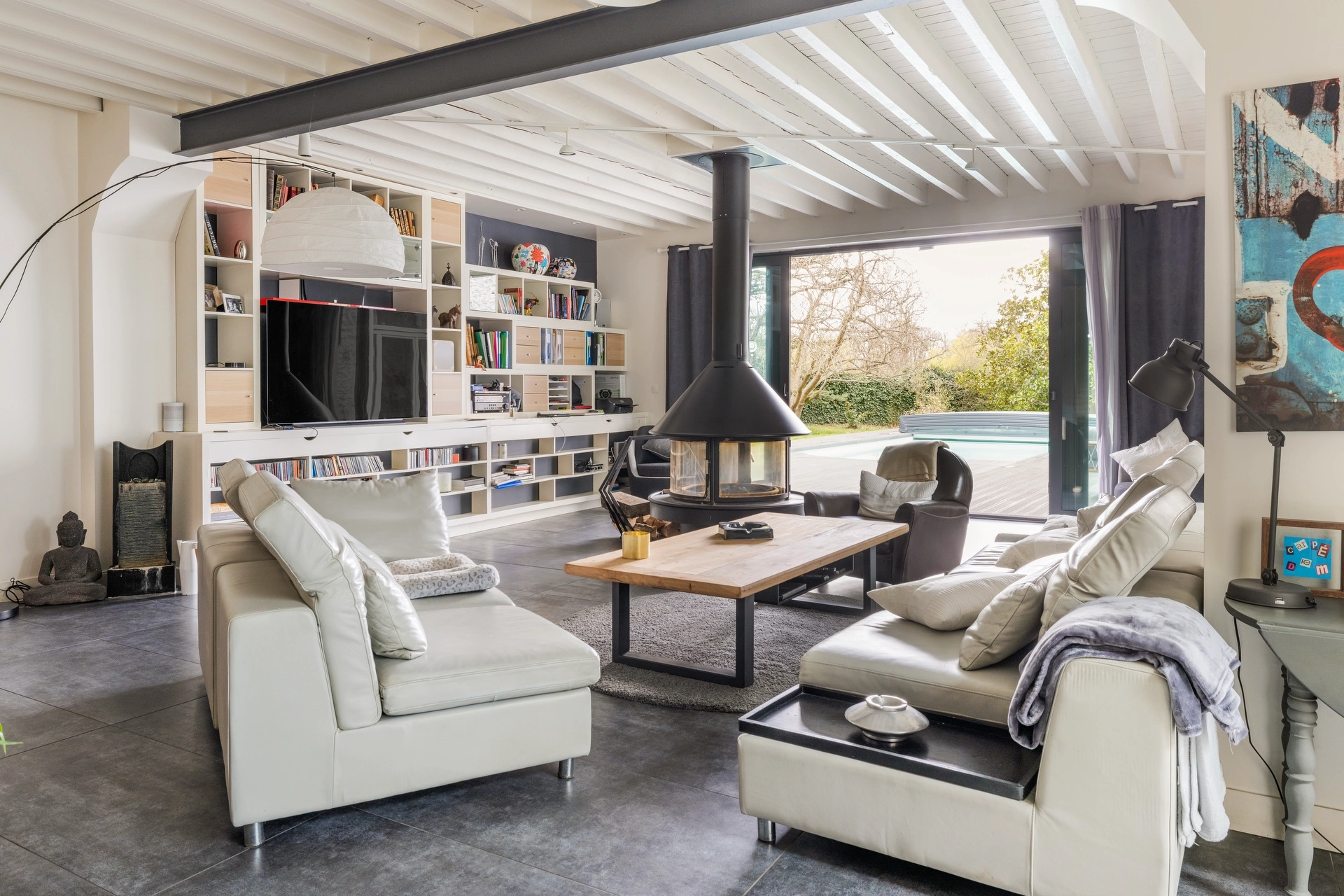
In architecture, luxury real estate, and retail, communication tools are evolving rapidly. 3D virtual tours have become common, and some professionals wonder if they could completely replace professional photography.
In reality, these two tools meet entirely different needs. They do not compete with each other: they reinforce each other. As an architecture and real estate photographer, I see every day how still images remain indispensable for telling the story of a location, while 3D offers a complementary technical reading.
Two Tools with Two Different Purposes
Professional photography and virtual tours do not serve the same objectives. It is crucial to distinguish their roles:
- Professional photography: I create images designed to convey an emotion, enhance an atmosphere, and guide the viewer’s eye. A well-constructed photograph immediately stages the space: light, style, textures, proportions, and architectural intent.
- 3D virtual tour: This allows for complete and autonomous exploration. The user moves freely through the location, understanding the layout, structure, and volumes. It is a highly useful tool for projecting oneself in a technical and realistic way.
In short: one inspires, the other explains. Both are essential in a premium communication strategy.
Why Professional Photography Remains Irreplaceable
Even as 3D technology advances, it does not reproduce the visual finesse of a professional image. Natural light, shadows, materials, and textures have a sensitivity that currently exceeds the capabilities of a virtual tour. A carefully crafted photo catches the eye and creates immediate emotion.
In real estate as well as in retail, it is often this first impression that triggers the decision to dive deeper and take the tour. Photography is a powerful marketing tool: it boosts perceived value, clarifies high-end positioning (as explained in my article on luxury real estate photography), and serves as the foundation for all communication (website, social networks, press kits).
What the Virtual Tour Brings as a Complement
A 3D virtual tour becomes particularly relevant for specific projects:
- Large spaces (offices, warehouses).
- Complex retail concepts and boutiques.
- Hotels and hospitality venues.
- Multi-unit commercial spaces.
- Properties where circulation and volumes must be precisely understood from a distance.
It improves the user experience by offering total freedom of navigation. Where the photo shows the essential, 3D shows the functional.
Why High-End Brands Use Both
Premium brands, developers, and specialized agencies very often combine both approaches:
- Still images to highlight the style, mood, and signature of the location. This is the ideal medium for marketing campaigns.
- 3D virtual tours to assist in decision-making, ensure technical scouting, or reassure a remote buyer.
This complementarity strengthens overall consistency and improves the quality of the customer journey, a strategy I regularly apply for my clients in the Retail & Commercial sector.
The Limits of Using a Virtual Tour Alone
Even if highly useful, a 3D virtual tour cannot replace visual storytelling. Its limits are clear:
- It lacks artistic intent (neutral framing).
- It can flatten the actual mood or distort certain materials.
- It does not convey the “personality” of the place.
- It remains poorly suited for brand storytelling.
Professional photography allows you to structure a narrative: it is this dimension that captures attention and generates desire.
My Added Value as a Photographer
In my reportages, I do not just document. I strive to:
- Build a coherent series that is faithful to the space.
- Harmonize colors and light to showcase the architectural work.
- Reveal materials and details that 3D cannot render with the same subtlety.
- Compose images that reflect the identity of the location or the brand.
I bring an artistic yet rigorous and technical vision, indispensable for producing images tailored to premium real estate marketing and demanding retail projects.
Conclusion: Two Tools That Reinforce Each Other
In a comprehensive communication strategy, professional photos and 3D virtual tours do not fulfill the same role. One inspires and rallies an audience around a visual universe; the other informs and facilitates spatial understanding. Together, they offer a richer experience, increase a project’s visibility, and maximize the impact of marketing campaigns.
Hesitating about which visual strategy to adopt? Let’s discuss your needs to define the visuals that will best enhance your project.