
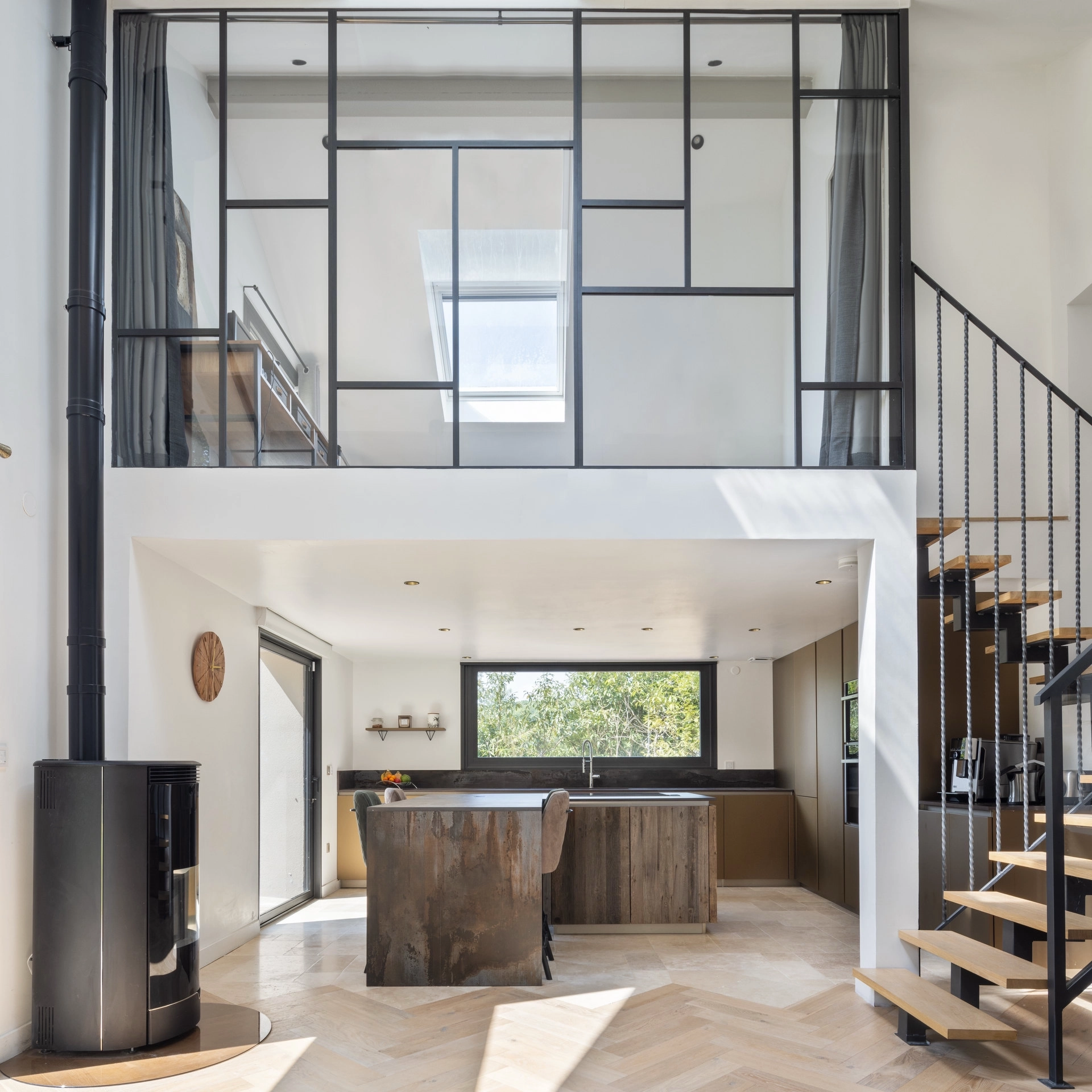
Renovating a property is a technical and human adventure. It often starts from a restrictive existing layout to arrive at a completely reinvented space. Yet, in the communication of professionals, we often only see the final, smooth, and perfect result.
That is a shame. By only showing the end, the complexity of the work accomplished is obscured. My role, at the crossroads of architecture photography and real estate photography, is to help professionals document this story to better highlight their expertise.
Why Document the Initial State (The “Before”)?
The most common mistake is waiting until delivery to call the photographer. However, without an image of the initial state, it is difficult for your future clients to gauge the sheer scale of the transformation.
A professional photo taken before or at the very beginning of the construction site freezes the raw potential of the location. Even if it is not the most “glamorous” image, it is proof of your ability to project and envision. This is an indispensable complement to the work I do on renovated historical architecture, where the dialogue between heritage and modernity is central.
The Construction Site: The Beauty of Technique
Between the “Before” and the “After”, there is technique. This is where the architect or craftsman proves their value.
Photographing an ongoing construction site is not just about showing rubble. It’s about showing:
- The stripping of structures (beams, load-bearing walls).
- The quality of insulation or finishing materials.
- The complexity of integrated networks.
As I explain in my article on construction site photography, these images reassure clients about constructive quality and feed powerful storytelling on social networks or in your corporate communication portfolio.
The Final Result: The Reward
The final reportage brings the story to a close. This is the moment when light, materials, and volumes take on their full meaning.
If the process has been documented, the final image has much more impact. You are no longer just looking at “a beautiful living room”; you are looking at “a living room that was created from a dark attic.” This visual narrative completely changes the perception of your work among your prospects and justifies the value of your fees.
The Importance of Anticipation (Scouting)
To successfully tell this story, improvisation is highly risky. If you want to create relevant visual comparisons, it is crucial to anticipate the camera angles right from the start.
This is the whole point of scouting before a shoot. By stepping in early in the project, I can identify the key perspectives that will be magnified once the work is finished, thereby guaranteeing visual consistency throughout the entire project.
Conclusion
Stop hiding the journey. Transformation is your best advertisement. By documenting your renovations from A to Z, you are not just selling an aesthetic result; you are selling your problem-solving expertise.
Are you starting an ambitious transformation project? Let’s talk about it now so we don’t miss the beginning of the story.