
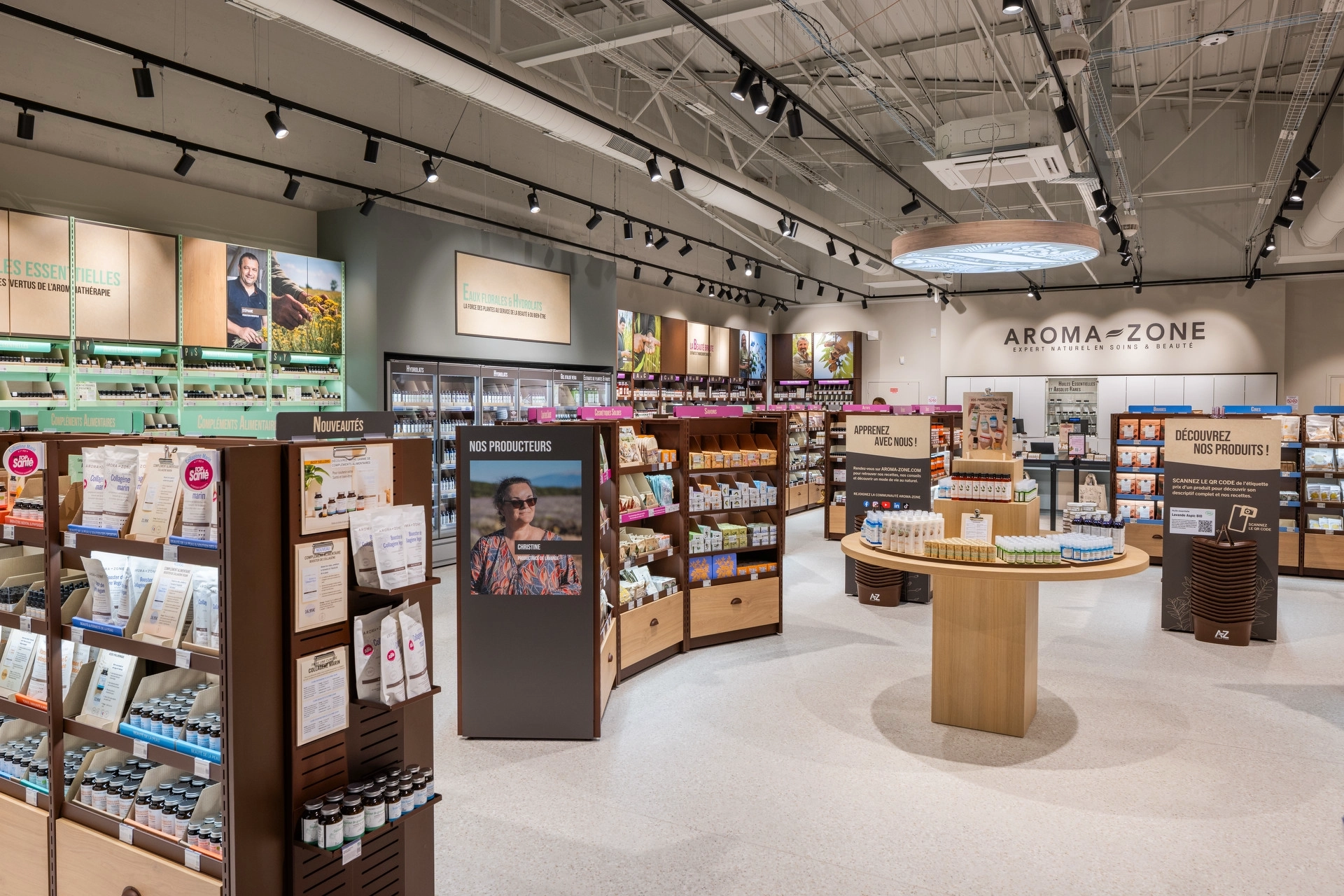
In commercial architecture, even more so than in residential spaces, the boutique is designed like a genuine theater stage. Light does not solely serve to illuminate the space: it is a strategic tool of seduction, designed to guide the customer’s journey, prioritize products, and create a strong brand identity.
For a photographer specialized in Retail, the major challenge is not to add light, but to understand and capture the light that has been meticulously planned by the architect and the Lighting Designer.
Respecting the Lighting Plan and Visual Hierarchy
When an interior designer designs a boutique, they establish a precise “lighting plan” that defines warm zones and cold zones. It is this alternation of shadows and light that creates the volume and intimacy of the location. A common mistake in photography would be wanting to light everything uniformly, which would “flatten” the image and destroy the mood intended by the creator.
On the contrary, my approach consists of reading this luminous score to transcribe it faithfully. If the architect has decided to plunge the aisles into twilight to highlight the product shelves (Visual Merchandising), my photography must respect this stark contrast, because it is what directs the future customer’s eye to the essentials.
The Technical Challenge: Mastering Contrast Dynamics
Photographing artificial light sources, such as directional LED spots or neon lights, poses a considerable technical challenge in terms of dynamic range. The difference in brightness between a lightbulb filament and a dark corner of the shop is often greater than what a camera sensor can record in a single shot.
To avoid getting photos with “blown out” areas (white patches with no details) or crushed blacks, I use advanced exposure and blending techniques in post-production. This allows me to retain the texture of the light source itself while keeping detail in the shadows, thus restoring a perfectly balanced image, close to human vision.
Color Fidelity and Reflection Management
Beyond intensity, the quality of light directly influences the perception of materials and products. In a Retail environment, we often mix different color temperatures: daylight entering through the storefront, general ceiling lighting, and accent lighting in the niches.
This mix can create undesirable color shifts. My job is to harmonize these sources to ensure that the wood furniture retains its natural warmth and that the colors of the products being sold are strictly faithful to reality. Similarly, managing reflections on windows, screens, and lacquered surfaces requires millimeter-precise positioning so that the shine emphasizes luxury without ever interfering with the image’s readability.
Conclusion
The success of a boutique photograph lies in its ability to immerse the viewer in a mood. By carefully capturing the lighting scenography, we do not just show the architecture of the place; we validate the promise of the customer experience you have designed.
Have you carefully crafted your concept’s lighting? Let’s shoot a reportage that does it justice.