
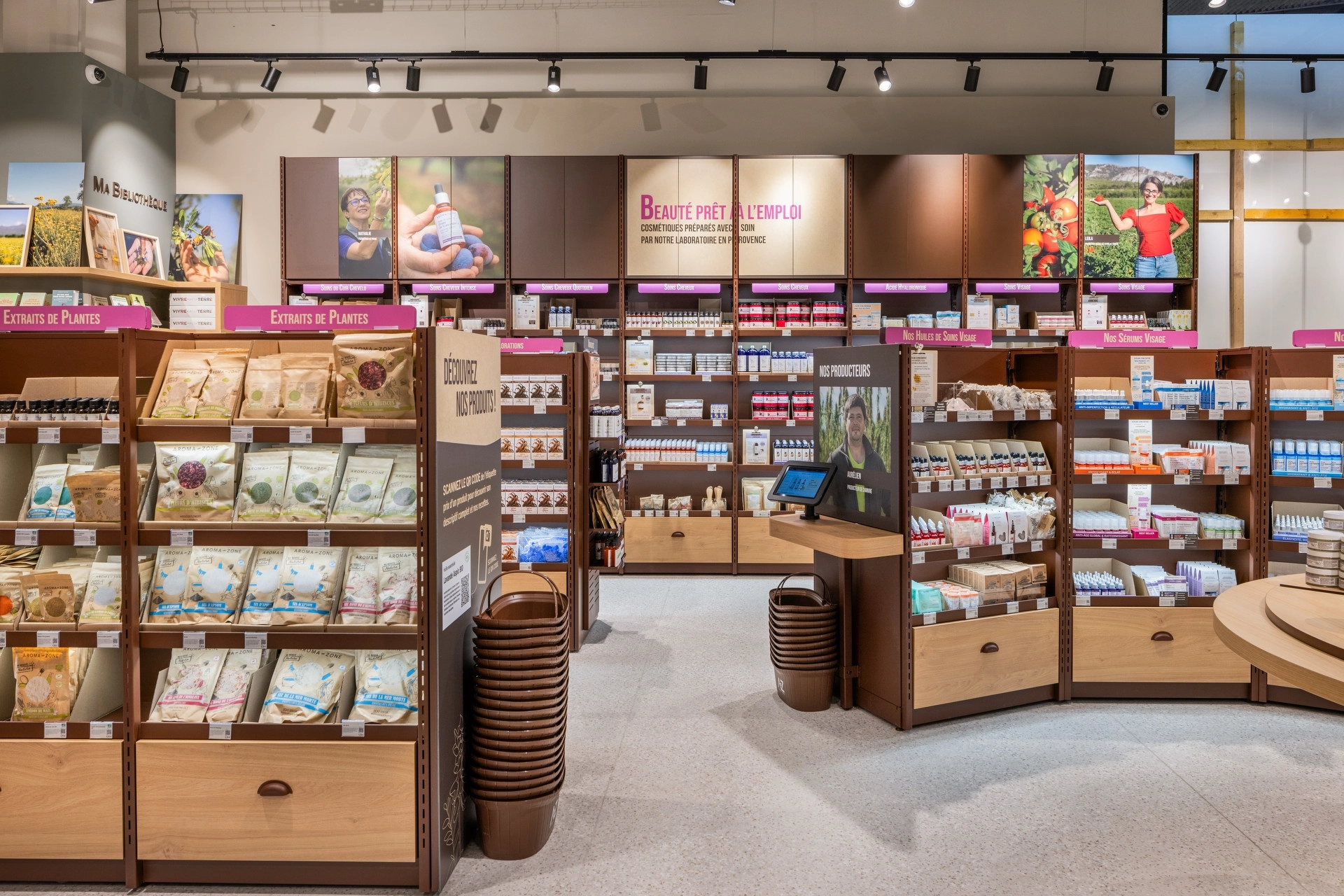
A boutique is not just polished architecture; it is, above all, a commercial showcase designed to elevate products. “Visual Merchandising” (VM) is the art of strategically arranging these products to trigger the act of purchasing.
My role as a retail photographer is to capture this commercial logic with the exact same high standards applied to the location’s architecture. Whether for a perfumery, an optician, or a concept store, the image must translate the quality of the staging.
Facing and Geometric Rigor
In retail, alignment is king. A poorly photographed product display can give an impression of disorder or look “low-end.”
I pay obsessive attention to geometry:
- Planogram compliance: Shelf lines must be perfectly parallel and horizontal.
- Facing: I make sure that products are brought forward and aligned to the millimeter.
This geometric rigor is the foundation of my work, as I explain in my article on the secrets of good composition. A successful retail photo is one where the eye navigates without obstacles, guided by the vanishing lines of the furniture.
Light on the Product: Revealing Textures and Materials
Wood, glass, metal, cardboard packaging… Light must make the material look “tactile” while remaining faithful to the true colors of the products.
This is a constant technical challenge, especially when managing reflections on perfume bottles or glasses. Unlike a studio packshot on a white background, I photograph the product in its actual luminous environment. This requires perfect mastery of light sources to avoid unsightly glare while maintaining the sparkle that makes the product desirable. This is where managing artificial lights (spotlights, shelf backlighting) becomes crucial.
From Wide Shots to Close-Ups: Contextualizing the Offer
Photographing Visual Merchandising is not about isolating an object; it is about showing how it fits into the brand’s universe.
In my retail photography reportages, I always build a visual narrative:
- The wide shot: To show the general atmosphere and the circulation around the product islands.
- The medium/tight shot: To isolate an endcap or a specific product highlight.
- The detail: To appreciate the finish of a material or the quality of a packaging.
It is this variety of shots that allows brands to simultaneously feed their websites, press kits, and social networks.
Conclusion
Beautiful architecture draws the customer inside, but it is flawless product staging that makes them buy. Your photos must showcase both facets with the same intensity.
Have you just finalized a new concept or a new store layout? Let’s immortalize your merchandising with a precise and aesthetic reportage.