
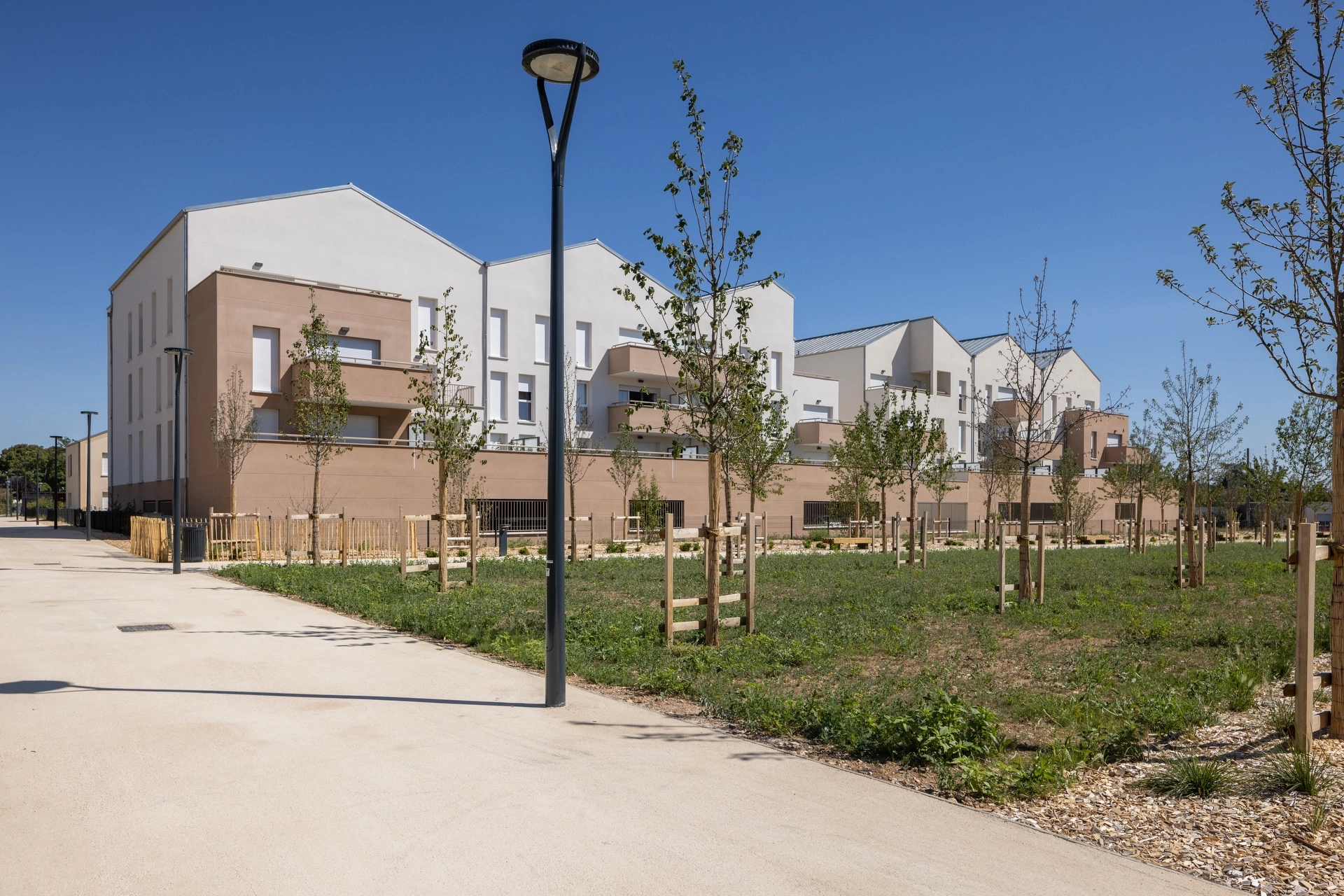
Composition plays a central role in my approach to architecture photography. It constitutes the very structure of an image: it organizes the lines, balances the volumes, and creates a clear visual path to understand a location.
In every project—whether it’s a residential building, a corporate workspace, a private home, a boutique, or highly atypical architecture—I take the time to observe how shapes behave, how light flows, and how to best tell the designer’s intended story.
By mastering these elements, I build images that do not merely document a building: they enhance its identity, its atmosphere, and the architectural choices that define it.
Understanding the Basics of Architectural Composition
The first step is to “read” the architecture as it presents itself to me. I observe the dominant lines, symmetries, visual breaks, facade rhythms, and key volumes. This examination allows me to determine exactly what the image needs to tell: the monumentality of a facade, the fluidity of a pathway, the precision of a detail, or the relationship between the interior and exterior.
In many projects, composition also serves to clarify the space: a complex lobby, a very open workspace, or a visually rich facade requires rigorous organization to help the eye understand the scene. This preliminary analysis creates the foundation for a readable, harmonious image tailored to the client’s communication needs.
Playing with Lines, Shapes, and Volumes
Lines are arguably the most powerful tool in architecture photography. They guide the eye and give rhythm to the image:
- A strong perspective to create depth.
- A firm horizontal line to convey stability.
- Diagonals to energize a space.
- Assertive verticals to accentuate height.
I constantly look for the angle that best reveals the project’s intention. A minimalist building lends itself to a very refined, centered, and symmetrical composition. Conversely, architecture with organic or contemporary shapes sometimes demands a freer approach, where I play more with breaks and curves.
Volumes also come into play. Depending on the time of the shoot, light creates shadows that sculpt the building. Every volume becomes a tool to create consistency and lead the viewer’s eye.
The Importance of Light and Shadow
Natural light heavily influences composition. It reveals textures, softens facades, or conversely, accentuates contrasts. Outdoors, I adapt my schedule to the building’s orientations to capture the most relevant light.
Shadows also structure the image. They allow me to:
- Create contrast without excess.
- Highlight an important architectural relief.
- Reinforce an axis or leading line.
- Add a more graphic dimension.
Indoors, I pay close attention to the balance between natural and artificial light. I use shadows to give rhythm to the reading of the image and reinforce the accuracy of the mood.
Composing a Coherent Series: A Key Challenge
Composition is not limited to an isolated image. In a complete photo reportage, every photograph has a role. I often organize my series according to a logical progression:
- Contextualized wide shot to situate the building in its environment.
- Main facades and volumes to understand its identity.
- Structural interior spaces like the lobby, hallways, and major rooms.
- Architectural details that give character: materials, woodwork, lighting, rhythms.
- Narrative viewpoints that show intention: inside/outside relationship, strong visual axes…
This consistency makes the series much more fluid. To go further, you can read my article on building a coherent series in architecture photography.
Adapting Composition to Client Needs
Composition is also a strategic tool. When an architect entrusts me with a shoot, I aim to meet their exact expectations:
- Highlight the innovation of the project.
- Show the quality of the materials.
- Illustrate comfort and circulation.
- Integrate or minimize certain surrounding elements.
In real estate or interior design, I also adapt the composition to the final target. The way I compose must therefore remain flexible while maintaining a highly coherent visual signature.
Conclusion
Composition is one of the core pillars of my work as an architecture photographer. It allows me to create balanced, elegant images that remain entirely faithful to the project.
Ready to visually structure your communication? Explore my architecture photography portfolio or contact me today.